
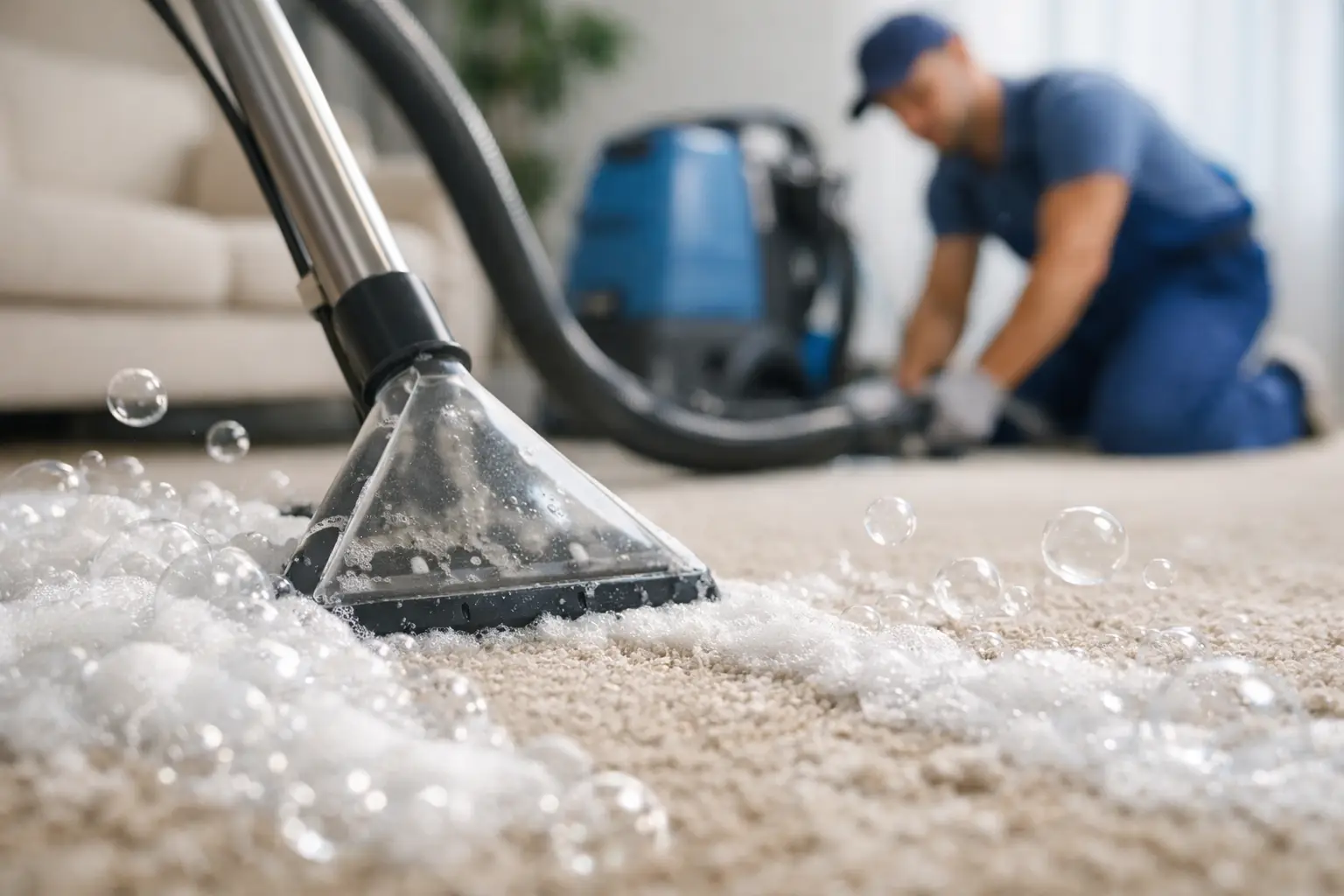
A deep carpet cleaning process should do more than make carpet look better for a day or two. It should remove the dry soil, tracked-in grime, oils, pet-related buildup, and lingering odors that regular vacuuming cannot fully reach – without leaving your home smelling damp or your carpet soaked for days.
For busy households, the result matters just as much as the method. You need clean carpet that feels fresh underfoot, is safe around children and pets, and can get back to normal quickly. That is why understanding what happens during a professional deep cleaning can help you choose a service that fits your home.
What Is a Deep Carpet Cleaning Process?
Deep carpet cleaning is a more thorough service than routine maintenance cleaning. It focuses on the debris and residue held below the visible surface of carpet fibers, where foot traffic, spills, pet dander, and airborne particles tend to settle.
Even a carpet that does not look heavily stained can hold a surprising amount of soil. Fine grit works its way down into the pile over time. Body oils collect near furniture and walkways. Food crumbs, pollen, and pet hair can become trapped where a household vacuum cannot consistently reach.
A proper service starts by identifying what the carpet needs. High-traffic lanes, pet areas, old spots, delicate fibers, and heavily used rooms may each require a different approach. The goal is not to treat every carpet the same. It is to lift out the soil safely while protecting the carpet and the home around it.
The Steps That Make Cleaning More Effective
Professional results come from preparation, appropriate cleaning products, and careful extraction or soil removal. Skipping the early steps can leave dirt behind or make spots appear to return quickly.
Inspection and a Clear Plan
The first step is examining the carpet’s condition. A technician looks for visible stains, wear patterns, odor sources, fiber type, and areas that may need extra attention. This is also the time to point out spills, pet accidents, or problem spots that concern you.
Not every stain can be completely removed, especially if it is old, has been treated repeatedly with the wrong product, or has permanently changed the fiber’s color. A trustworthy cleaner should set realistic expectations instead of promising results no one can guarantee.
Dry Soil Removal
Dry soil is one of the biggest causes of dull, worn-looking carpet. Sand, dust, and fine grit can act like abrasives when people walk across the floor. Thorough vacuuming or dry soil removal before deeper treatment helps prevent that grit from being pushed further into the carpet.
This step is easy to underestimate. When loose debris is removed first, the cleaning solution can focus more effectively on oily residue and embedded grime.
Spot and Odor Treatment
Spots need to be treated based on what caused them. Coffee, food grease, juice, ink, pet accidents, and tracked-in mud do not respond the same way. Using a one-size-fits-all product can set a stain, leave residue, or damage sensitive fibers.
Odor treatment also requires more than covering a smell with fragrance. If the source is pet-related, for example, the treatment needs to address the affected area rather than simply freshening the surface. The best approach depends on whether the issue is recent, recurring, or has reached the carpet backing or padding.
Cleaning the Carpet Fibers
After preparation, the cleaning method works through the carpet pile to loosen and remove soil. Some systems use large amounts of water and extraction. While hot-water methods can be appropriate in certain situations, too much moisture can create practical problems in a home.
Over-wet carpet may take a long time to dry, especially during damp Puget Sound weather or in rooms with limited airflow. That delay can disrupt your routine and may create a musty smell if moisture remains in the carpet or padding.
DryMaster of Puget Sound uses a low-moisture, dry-shampoo approach designed to clean deeply without soaking the carpet. The process uses barely damp, eco-friendly cleaning solutions to break up embedded soil and residue while helping carpet dry much faster than heavily saturated methods. For many households, that means less waiting, less concern about mildew, and a room that is ready to use sooner.
Finishing the Job
A deep cleaning should leave the carpet looking more even and feeling refreshed, not sticky or crunchy. Residue matters because leftover soap or chemicals can attract new dirt and make carpet look dirty again sooner.
After cleaning, the technician checks the treated areas, addresses remaining concerns when possible, and makes sure the carpet is left in good condition. Some spots may need additional treatment, while others may improve substantially but remain faint due to age or permanent fiber damage. Clear communication is part of good service.
Why Low-Moisture Cleaning Matters at Home
There is a common belief that wetter means cleaner. In carpet care, that is not always true. Effective cleaning depends on using the right amount of moisture, the right solution, and the right technique for the carpet’s condition.
Low-moisture cleaning is especially useful for families who cannot keep rooms out of service for long. If you have children playing on the floor, pets moving through the house, or a busy schedule, waiting all day for soaked carpet to dry is more than an inconvenience.
A barely damp process also reduces the risk of moisture sitting too long in carpet backing or padding. This does not mean every carpet problem can be solved with one method. Severe flooding, heavy contamination, or extensive pet urine below the surface may require a different level of restoration. But for routine deep cleaning, stains, traffic soil, and common odors, low-moisture care offers a practical balance of effective results and faster dry times.
How Often Should Carpet Be Deep Cleaned?
The right schedule depends on how your home is used. A lightly used guest room may only need professional cleaning occasionally. A family room with pets, children, frequent visitors, and daily foot traffic usually needs more attention.
Many homes benefit from deep cleaning every 12 to 18 months. You may want service sooner if you notice dark walkways, recurring odors, visible spots, allergy-related concerns, or carpet that feels rough or matted. Cleaning before dirt becomes deeply packed into the fibers can help maintain the carpet’s appearance over time.
Regular vacuuming is still essential between appointments. Focus on entryways, hallways, stairs, and the areas in front of sofas and chairs. Address fresh spills promptly by blotting – not rubbing – with a clean white cloth. Avoid using too much store-bought spot cleaner, since excess product can leave a residue that attracts soil.
Signs It Is Time to Schedule Service
Carpet does not need to look blackened or heavily stained before it needs professional care. Often, the first signs are more subtle: a stale smell after the room is closed up, traffic paths that look darker than surrounding carpet, or fibers that no longer feel soft after vacuuming.
Pet owners may notice that odors return when humidity rises. That can indicate residue or odor-causing material below the surface. Households with young children may also choose a family-safe cleaning service more often because carpets collect crumbs, spills, and the everyday mess that comes with active living.
If you are preparing for guests, moving into a home, listing a property, or simply ready to make your space feel cleaner, deep carpet care can make a visible difference without turning your home into a construction zone.
A clean carpet should support the way you live – fresh, comfortable, and ready for the next day. When choosing a cleaning service, ask how the carpet will be treated, how long it should take to dry, and whether the products are appropriate for the people and pets in your home. Those answers matter long after the appointment is over.
Leave a Reply