
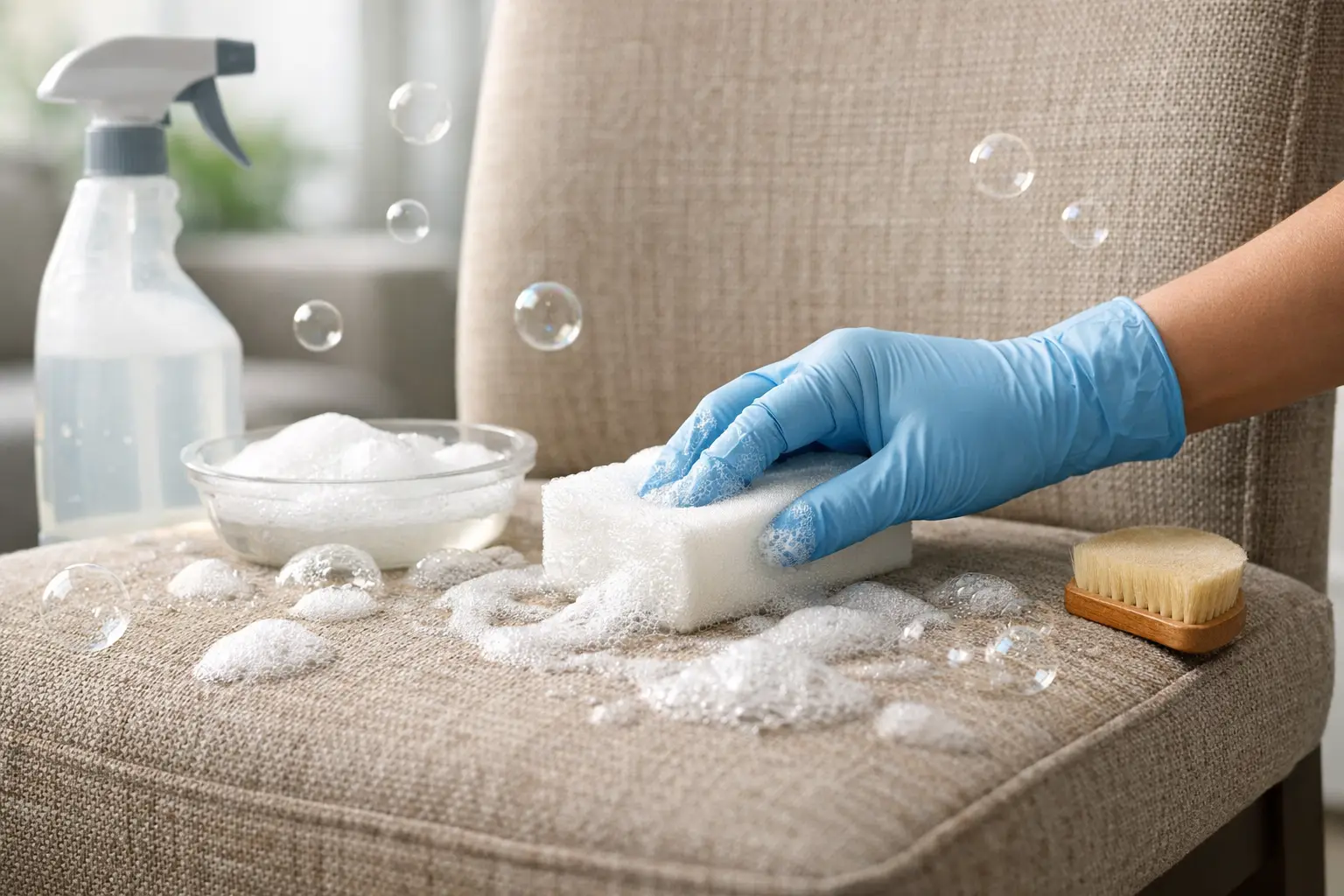
A dining chair that looks fine from across the room can hold a surprising amount of body oil, food residue, pet hair, dust, and everyday odors. The challenge with how to clean upholstered chairs is getting fabric truly clean without scrubbing too hard or leaving the padding wet enough to smell musty later.
For most homeowners, the safest approach is simple: identify the fabric, remove dry debris first, use as little moisture as possible, and give stains quick attention. That protects the chair’s color, texture, and cushioning while keeping your home fresher for the people and pets who use it every day.
Start With the Chair’s Cleaning Code
Before applying any cleaner, look underneath the seat cushion or chair frame for the manufacturer’s care tag. Most upholstered furniture uses a letter code that tells you what type of cleaning is appropriate.
A W means water-based cleaning products are generally safe. An S means use a solvent-based upholstery cleaner only. WS means either type may be used, while X means vacuuming or professional cleaning only. If there is no tag, treat the fabric cautiously and test any product in a hidden spot first.
This step matters because upholstery is not one material. Cotton, linen, microfiber, velvet, wool blends, and performance fabrics all react differently to water and cleaners. A product that works on a synthetic dining chair may leave a ring, fade, or stiffen a natural-fiber fabric.
Vacuum Before You Treat Stains
Cleaning a stain before removing dry soil often turns crumbs, dust, and pet hair into muddy residue. Start by vacuuming the seat, back, sides, seams, piping, and the narrow space where the upholstery meets the wood or metal frame.
Use an upholstery attachment with clean, soft bristles. A crevice tool is useful for seams, but avoid dragging hard plastic edges across delicate fabric. If pet hair is clinging to the chair, a dry rubber glove or lint brush can lift it before vacuuming.
Vacuuming is more than a cosmetic step. Fine grit works its way into upholstery fibers and causes them to look dull or wear faster. Regular dry soil removal helps chairs stay cleaner between deeper cleanings.
How to Clean Upholstered Chairs With Minimal Moisture
Once you know the cleaning code and have vacuumed, mix or choose a cleaner that matches the fabric’s needs. For W or WS fabrics, a small amount of mild upholstery cleaner or gentle dish soap diluted in water may work for general surface cleaning. The goal is light foam or a barely damp cloth, not a saturated seat.
Test the solution on an inconspicuous area, such as the back edge of the seat. Let it dry completely before moving ahead. Watch for color transfer, water rings, rough texture, or any change in the fabric’s appearance.
If the test area looks good, work on one small section at a time. Dip a clean white microfiber cloth into the solution, then wring it out thoroughly. Blot or lightly wipe the fabric in a consistent direction. Do not pour cleaner directly onto the chair, and do not soak the cushion through the fabric.
Follow with a second clean cloth that is lightly dampened with plain water to remove remaining cleaner. Then blot with a dry towel to pull out as much moisture as possible. Open windows, run a fan, or increase airflow so the chair dries promptly.
Overwetting is the mistake to avoid. Moisture can travel into foam, batting, wood frames, and webbing below the fabric. A chair may feel dry on top while the inner cushion stays damp, creating conditions for lingering odors or mildew.
For microfiber chairs
Many microfiber chairs have an S or WS code. They often respond well to a fabric-safe solvent cleaner or a small amount of rubbing alcohol on a white cloth, but always follow the care tag. Work in light strokes, avoid saturating the fabric, and gently brush the fibers after drying if they feel stiff.
For delicate or natural fabrics
Velvet, silk, wool, linen, and some cotton blends need extra care. Water can leave marks or change the pile of velvet. For these fabrics, spot treatment should be minimal, and professional upholstery cleaning is often the safer choice, especially for large stains or overall dullness.
Treat Common Upholstery Stains Quickly
The longer a spill sits, the more likely it is to bond with the fibers or soak into the cushion. Blot fresh spills immediately with a clean white towel. Press straight down and lift. Rubbing spreads the stain and can damage the fabric’s texture.
For food, coffee, or juice on a W-coded chair, lightly blot with a mild water-based upholstery solution. Work from the outer edge toward the center so the stain does not spread. Repeat patiently rather than using a stronger cleaner too soon.
For greasy marks, such as salad dressing, body oil, or pet-related grime, start by blotting away excess residue. A fabric-safe upholstery product may be necessary, but avoid household degreasers, bleach, and heavily scented sprays. They can leave residue that attracts more dirt or cause discoloration.
Pet accidents need attention beyond the visible mark. Blot up moisture first, then use an upholstery-safe odor treatment appropriate for the chair’s cleaning code. Covering the smell with fragrance does not remove the source. If odor remains after the fabric dries, the contamination may have reached the cushion padding and need professional treatment.
Ink, nail polish, paint, and red wine are higher-risk stains. Home remedies can make these stains worse, especially when the fabric type is uncertain. It is usually better to stop after gentle blotting and get advice from an upholstery cleaning specialist rather than experiment with multiple products.
Avoid These Common Chair-Cleaning Mistakes
A clean-looking chair should not come with a new problem. Avoid using more product than needed, because excess cleaner can dry into a sticky film that grabs dust and makes the fabric look dirty again sooner.
Steam cleaning can also be risky for some upholstered chairs. It may put too much heat and moisture into delicate fabrics, seams, and padding. While some furniture can handle extraction cleaning, it depends on the fabric, construction, and how effectively moisture can be removed afterward.
Do not use colored towels for cleaning. Dye can transfer when fabric is wet. Avoid aggressive brushes as well, particularly on textured weaves, velvet, chenille, and microfiber. A stain may fade, but the chair can be left with a permanently rough or flattened patch.
When Professional Upholstery Cleaning Makes Sense
At-home maintenance is effective for light soil and fresh spills. Professional service is a better fit when chairs have widespread dinginess, stubborn stains, pet odors, smoke odors, allergy concerns, or cushions that have been wet for too long. It is also a smart choice for heirloom furniture, expensive dining sets, and fabrics with an S or X cleaning code.
For homes in the Puget Sound area, fast drying is especially valuable during damp weather. Low-moisture upholstery cleaning can lift embedded soil while avoiding the over-soaking that leaves cushions damp for hours or longer. DryMaster of Puget Sound uses a barely damp, residue-free cleaning approach designed to help upholstery dry quickly without relying on excessive water.
Professional cleaning is not a replacement for routine care. It works best alongside regular vacuuming, prompt spill cleanup, and keeping pets off favorite chairs when possible. For chairs used daily at the dining table, in a living room, or near an entryway, a professional refresh can restore a cleaner appearance and a more comfortable feel.
Keep Upholstered Chairs Cleaner Between Appointments
A little prevention goes a long way. Vacuum chair seats and seams regularly, especially in homes with pets or young children. Rotate chairs occasionally so one seat does not absorb all the wear, and keep upholstered dining chairs away from direct sunlight when possible to reduce fading.
If your household tends to eat, craft, or work from upholstered chairs, consider a washable chair cover for the messiest activities. It may not suit every room, but it is easier to wash a cover than to address repeated stains in the fabric itself.
The best cleaning method is the one that respects the chair’s fabric and gets the job done without leaving behind moisture, residue, or uncertainty. When a stain is beyond a careful spot treatment, choosing professional help early can protect the chair you already love.
Leave a Reply