An Oriental rug can look clean on the surface while holding a surprising amount of grit deep in its foundation. That hidden soil acts like sandpaper every time someone walks across it, slowly wearing down fibers and dulling color. Knowing how to clean oriental rugs starts with protecting the rug from too much water, harsh chemicals, and aggressive scrubbing.
Many Oriental rugs are made with wool, cotton, silk, or a blend of natural fibers. Some are hand-knotted and use dyes that can bleed when they become overly wet. A careful approach keeps everyday dirt under control while helping preserve the rug’s texture, pattern, and value.
Start by Identifying What Your Rug Can Handle
“Oriental rug” describes a broad category, not one material or construction method. A machine-made rug with synthetic fibers may tolerate spot cleaning differently than a hand-knotted wool rug passed down through a family. If you have a care tag, follow it first. If there is no tag, assume the rug needs a gentle cleaning method until you know otherwise.
Look closely at the back, fringe, and edges. Loose threads, worn areas, brittle fringe, or a musty odor are signs that the rug may need professional attention rather than a full at-home cleaning. Silk rugs, antique rugs, and rugs with unstable dyes should not be saturated or cleaned with a rented steam machine.
Before using any product, test it in a small, hidden area. Apply a small amount, blot with a white cloth, and check for color transfer. If dye comes off on the cloth, stop. That rug needs specialized cleaning.
How to Clean Oriental Rugs for Everyday Care
Regular maintenance is the safest way to keep a rug looking fresh. Vacuuming removes dry soil before it settles deeper into the pile, but the method matters. Use a vacuum without a rotating beater bar when possible, especially on hand-knotted or delicate rugs. A beater bar can pull fibers, damage fringe, and create fuzzing along the surface.
Vacuum slowly in the direction of the pile once or twice a week in high-traffic areas. Vacuum the back occasionally to loosen embedded dirt, then vacuum the front again. Avoid running the vacuum over fringe. Use the upholstery attachment around the edges instead.
If the rug is small enough to move safely, take it outside and gently shake it or hang it over a sturdy railing for a light dusting. Do not beat it aggressively. The goal is to release dry dirt, not stress the rug’s foundation.
Rotating the rug every six to twelve months also helps. Sunlight, foot traffic, and furniture weight can cause uneven fading and wear. A simple rotation spreads that exposure across the rug rather than leaving one area to take all the damage.
Act Fast When a Spill Happens
The first few minutes after a spill make the biggest difference. Blot the area immediately with a clean, white absorbent towel. Press down firmly, then lift the towel straight up. Repeat with a dry section of towel until you are no longer pulling up moisture.
Do not rub, scrub, or use a colored towel. Rubbing pushes the spill deeper into the fibers and can distort the pile. Colored towels may transfer dye to a light-colored rug, creating a second problem.
For a water-based spill, such as coffee, juice, or a pet accident, lightly dampen a white cloth with cool water and blot from the outer edge toward the center. This helps prevent the spot from spreading. Use as little water as possible, then blot again with dry towels.
Greasy spills need a different approach. Blot away excess oil, then apply a small amount of an appropriate rug-safe cleaning solution only after testing it. Avoid dish soap, laundry detergent, bleach, ammonia, and strong household stain removers. These products can leave residue that attracts more soil, strip color, or weaken natural fibers.
Pet accidents deserve extra care because the visible spot is not always the whole problem. Urine can soak through the pile and into the backing, creating lingering odor as it dries. Surface cleaning may improve the appearance without removing the source. If odor returns on humid days or after the rug is cleaned, professional odor treatment is often the better choice.
Avoid Soaking the Rug
Overwetting is one of the most common causes of avoidable rug damage. When water reaches the foundation and cannot dry quickly, it can lead to browning, dye migration, mildew, a sour odor, or shrinkage. Cotton foundations are especially vulnerable to distortion when they stay wet too long.
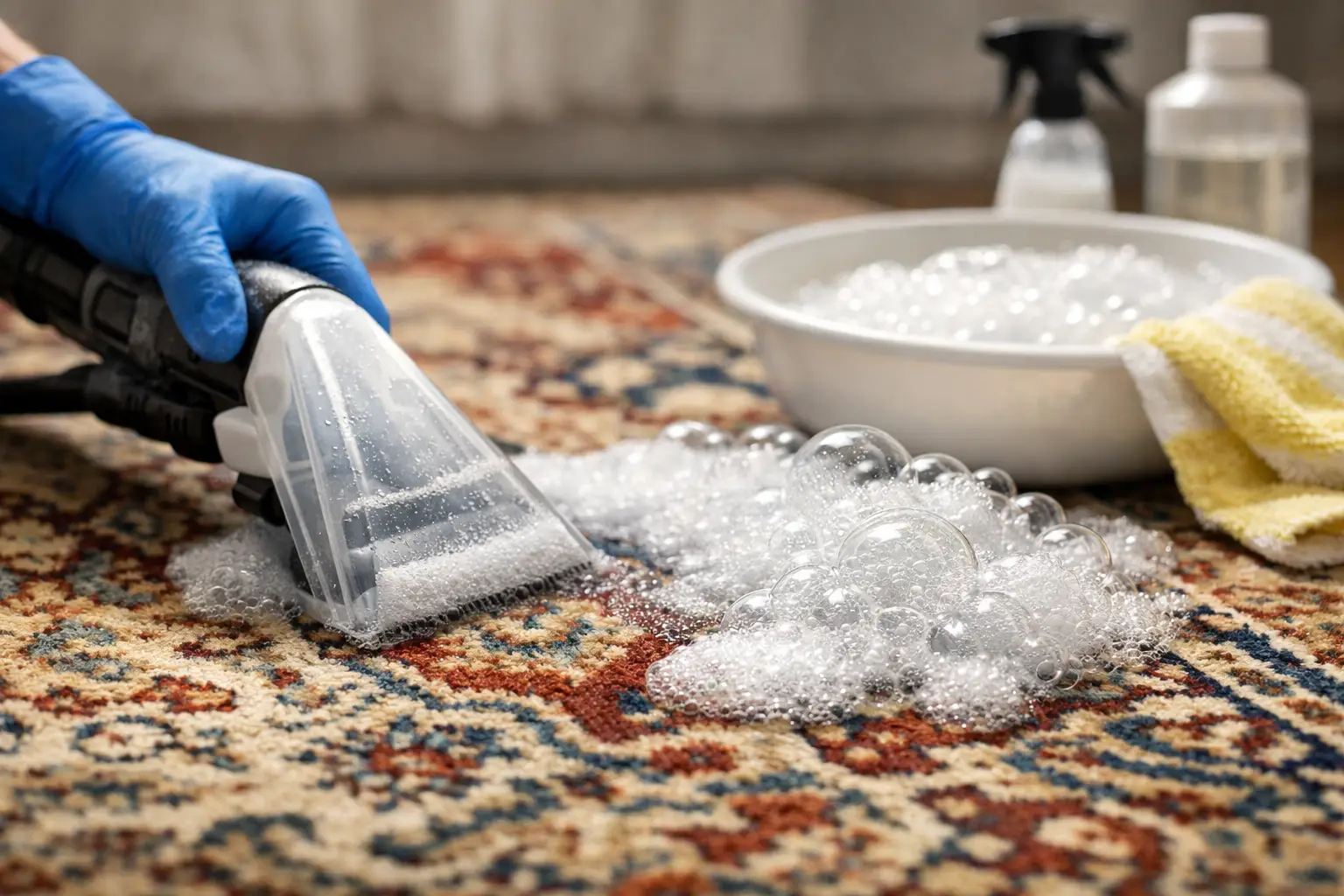
That is why a carpet steam cleaner is not automatically the right tool for an Oriental rug. Steam and extraction equipment can use more moisture than a delicate rug can safely manage, particularly when used by someone who cannot control water flow and drying conditions. Seattle-area homes can also have cooler, damp conditions that slow drying.
If you choose to clean a small, colorfast rug at home, use a barely damp cloth and a minimal amount of approved cleaner. Work in a small area, blot away moisture, and provide airflow with fans. Keep the rug flat while it dries. Hanging a wet rug can stretch the fibers and change its shape.
Never put a damp Oriental rug back on a hardwood floor or over carpet padding. Moisture trapped underneath can damage both the rug and the flooring below it.
Know When Professional Rug Cleaning Is Worth It
Some rugs need more than routine vacuuming and careful spill response. Professional cleaning is a smart choice when a rug has embedded soil, persistent pet odor, large stains, visible discoloration, smoke residue, or a sticky feel from past cleaning products. It is also the safer route for valuable, antique, silk, handmade, or heavily dyed rugs.
A qualified cleaner should evaluate the rug’s fibers, backing, dyes, condition, and type of stain before choosing a method. The right process depends on the rug. A safe cleaning plan for a sturdy synthetic area rug may be completely wrong for a hand-knotted wool piece.
For homeowners who want a lower-moisture option, DryMaster of Puget Sound uses barely damp, residue-free cleaning methods designed to avoid the soaking and long drying times associated with overly wet cleaning. Before any service, ask how the rug will be assessed, how much moisture will be used, and what drying process is recommended. Clear answers help you protect an item that may be both beautiful and personal.
Keep Dirt From Returning Too Quickly
Cleaning works best when the rug is protected afterward. Use a quality rug pad to reduce slipping, cushion foot traffic, and limit abrasion from below. A pad can also improve airflow, though it should never be used to hide moisture or odor issues.
Place doormats at exterior entrances and encourage family members and guests to remove shoes when practical. Fine dirt tracked in from driveways, sidewalks, and wet yards is often the main source of dullness in rugs. For busy homes with children or pets, more frequent vacuuming is usually more effective than waiting for the rug to look visibly dirty.
Sunlight deserves attention too. If direct sun reaches the same section of the rug each day, use window coverings during peak hours or rotate the rug regularly. Cleaning can remove soil, but it cannot restore color that has faded from prolonged UV exposure.
A well-cared-for Oriental rug does not need harsh treatment to stay clean. Gentle maintenance, quick blotting, minimal moisture, and professional help when the rug’s fibers or dyes are at risk will keep it comfortable underfoot and looking like it belongs in your home for years to come.
Leave a Reply