A carpet can look clean on the surface and still hold the moisture that causes trouble later. In the Puget Sound area, where wet weather and limited indoor airflow are common, carpet cleaning for mildew prevention is about more than removing spots. It is about getting carpets clean without leaving them damp long enough for musty odors and mildew to take hold.
Mildew is not always obvious at first. You may notice a stale smell after cleaning, a damp feeling underfoot, or an odor that returns when windows stay closed. The good news is that the right cleaning method, combined with fast drying and sensible home care, can greatly reduce the risk.
Why Damp Carpets Can Develop Mildew
Mildew needs moisture, organic material, and time. Carpets can provide all three when they are heavily soaked during cleaning or when spills, pet accidents, wet shoes, or minor leaks are not dried thoroughly. Dirt, skin cells, food crumbs, and pet dander can also become food sources for microbial growth.
A carpet does not need to feel soaking wet to be a concern. Moisture can remain deep in the backing, padding, or along the edges near walls even after the fibers feel dry. That is why a carpet that takes a full day or longer to dry deserves attention, especially in rooms with poor ventilation, shaded floors, or a history of moisture problems.
High humidity can slow the process further. During rainy periods, opening windows may not help much because outdoor air can carry more moisture inside. Running the HVAC system, using fans, or operating a dehumidifier can make a meaningful difference after any carpet cleaning.
Carpet Cleaning for Mildew Prevention Starts With Low Moisture
The cleaning method matters as much as the cleaning solution. Traditional hot-water extraction can be effective when performed properly, but it uses more water and requires strong extraction. If equipment, technique, airflow, or room conditions are not right, carpets may stay wet too long.
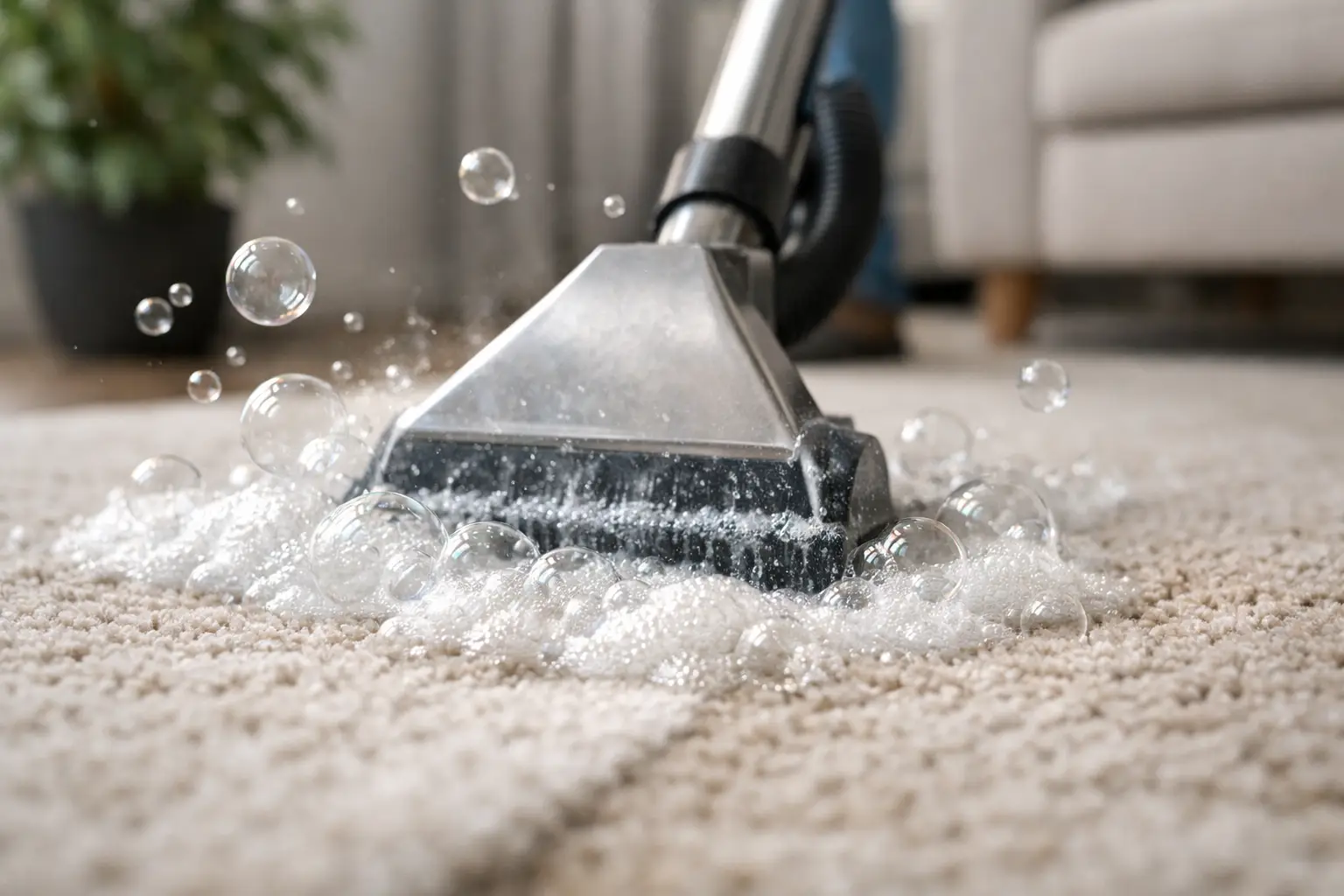
Low-moisture cleaning offers a practical alternative for many homes. DryMaster of Puget Sound uses a dry-shampoo approach that is barely damp rather than steam-based. The cleaning material works through the carpet fibers to lift embedded soil, then dries quickly without over-soaking the backing and pad.
That faster drying time is not simply a convenience. It helps reduce the window in which mildew can grow. It also means less disruption for busy households, children, pets, and furniture that needs to return to normal use sooner.
Low-moisture cleaning is particularly useful for routine maintenance, odor concerns, and homes where previous cleanings have left carpet damp for hours. For severe water damage, active flooding, or a confirmed mold problem beneath the carpet, standard cleaning is not enough. Those conditions may require water-damage restoration, removal of wet padding, and an inspection of the subfloor.
Clean the Whole Problem, Not Just the Stain
A visible stain is often only part of the issue. Pet accidents, spilled drinks, and tracked-in mud can travel below the carpet surface. Treating only the top fibers may improve appearance while leaving odor-causing residue or moisture underneath.
A professional cleaner should assess the affected area before choosing a treatment. The right approach may include spot treatment, odor control, deeper cleaning, and careful drying. Family- and pet-safe products are especially valuable in homes where little ones play on the floor or pets spend most of the day lounging on the carpet.
Habits That Keep Carpets Dry Between Cleanings
Professional cleaning gives your carpet a fresh start, but everyday habits protect that result. Address spills promptly by blotting with clean, absorbent towels. Avoid scrubbing aggressively, which can push moisture and residue deeper into the fibers.
Pay close attention to entryways, pet areas, and rooms near exterior doors. Use mats inside and outside entrances, and clean them regularly so they trap water and grit before it reaches the carpet. If pets come in wet, dry paws and coats before they cross carpeted rooms.
For homes with children or pets, it also helps to schedule regular cleaning before soil becomes deeply packed into the carpet. Waiting until carpets look heavily soiled usually means more intensive treatment is needed. Routine care keeps fibers fresher and reduces the buildup that can hold odors.
After any cleaning, keep air moving. Turn on ceiling fans, run portable fans across the carpet rather than straight down at one spot, and keep furniture from covering damp areas until the carpet is fully dry. If the weather is humid, a dehumidifier may work better than open windows.
Signs You Should Act Before Mildew Spreads
A musty odor after cleaning is the most common warning sign, but it is not the only one. Watch for carpet that remains damp longer than expected, discoloration near baseboards, recurring smells in one room, or a soft, spongy feel that suggests the pad may be wet.
If you suspect a plumbing leak, wet subfloor, or moisture coming through a concrete slab, cleaning the carpet alone will not solve the cause. Find and correct the moisture source first. Otherwise, the odor and mildew risk can return no matter how often the surface is cleaned.
For a small spill that was caught quickly, thorough drying may be all that is needed. For widespread dampness, repeated odors, or visible growth, it is wise to have the area evaluated promptly. Removing wet materials early can prevent a much larger repair later.
Do Not Cover Up a Musty Smell
Fragrance sprays and heavily scented powders can make a room smell better for a few hours, but they do not remove moisture or the source of the odor. Some powders can also leave residue in carpet fibers, making future cleaning more difficult.
A better result comes from removing the soil and odor source, then ensuring the carpet dries completely. Clean, residue-free carpet should smell neutral and fresh, not perfumed enough to hide a problem.
When to Schedule Professional Carpet Care
Most homes benefit from professional carpet cleaning every 12 to 18 months, although busy households may need service more often. Pets, young children, frequent guests, allergy concerns, and light-colored carpets can all shorten that schedule.
It is also smart to schedule service after a rainy season, before hosting family, after a pet-related odor issue, or when carpets begin to feel dull and stale. A quick-drying, low-moisture method can provide visible results without turning your home into a drying zone for the day.
The goal is simple: clean fibers, no lingering residue, and as little unnecessary moisture as possible. When your carpet dries quickly and the room smells genuinely clean, you can enjoy the comfort of a fresh home without worrying about what may be growing underneath. If a carpet feels damp or smells musty, treat it as an early signal, not something to live with.
Leave a Reply