
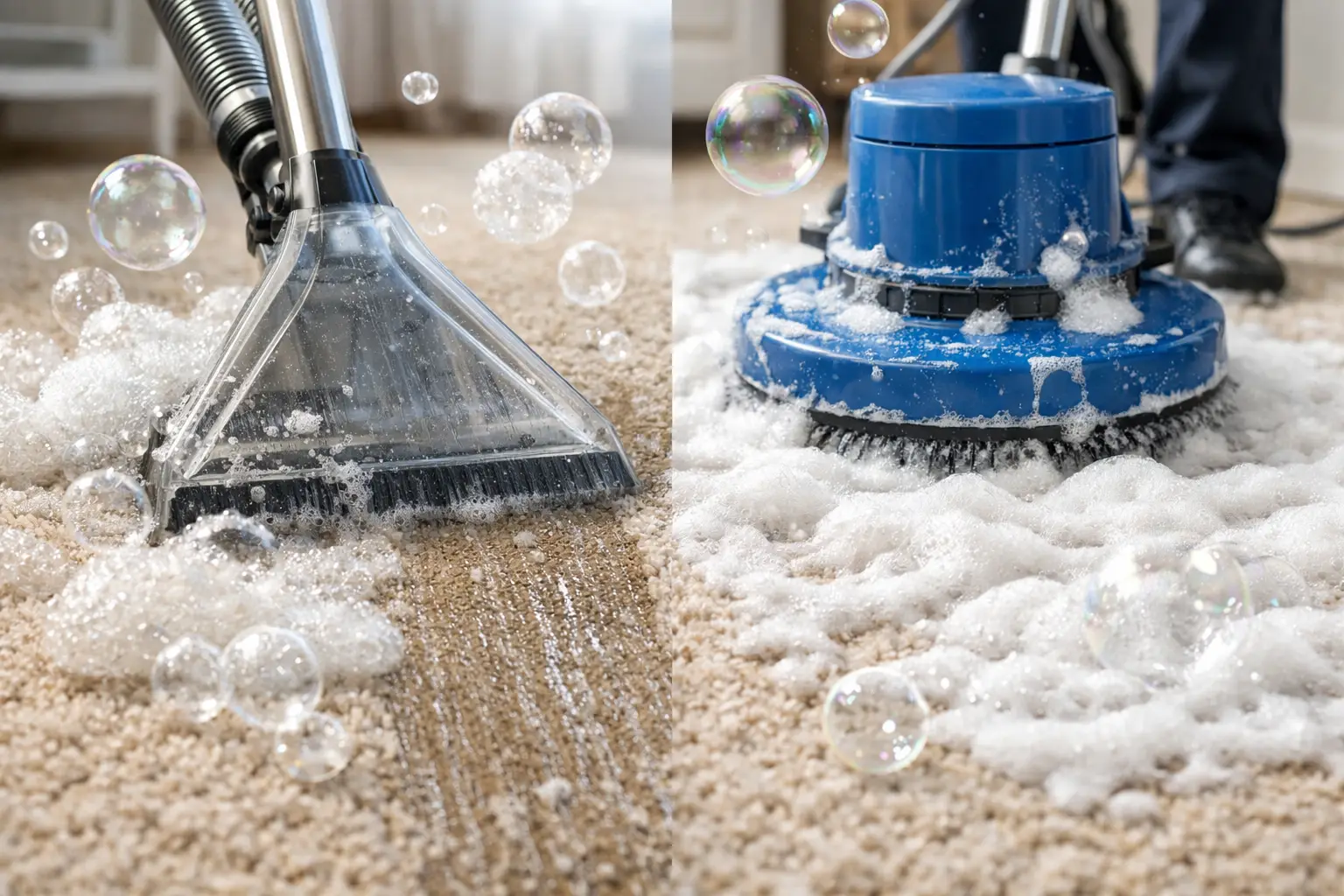
A carpet can look clean from the doorway and still hold tracked-in soil, pet dander, food residue, and odors deep in its fibers. That is why deep carpet cleaning vs shampooing is more than a question of terminology. The method affects how clean the carpet gets, how long it stays damp, and whether sticky residue attracts new dirt after the appointment.
For busy households, the best choice is usually the one that delivers visible results without soaking the carpet or disrupting the day. Here is how the methods differ and what to consider before scheduling service.
Deep Carpet Cleaning vs Shampooing: The Key Difference
Deep carpet cleaning describes the goal: removing embedded soil, stains, allergens, and odor-causing material from below the surface. It is not limited to one machine or process. A professional may use hot-water extraction, low-moisture encapsulation, dry compound cleaning, or a dry-shampoo system, depending on the carpet, its condition, and the problem being addressed.
Traditional carpet shampooing describes a process that uses a foaming or liquid detergent worked into the carpet, often with a rotary machine. The detergent loosens soil so it can be collected or removed afterward. This approach can improve appearance, especially on heavily soiled carpet, but it depends on proper rinsing or extraction. If too much product remains, the carpet may feel stiff or become dirty again sooner.
The word “shampooing” can also mean different things from one provider to another. Some companies use it casually to describe any carpet cleaning service. The useful question is not simply, “Do you shampoo carpets?” Ask how much moisture and solution are used, how residue is removed, and how long the carpet will take to dry.
What Deep Cleaning Should Actually Remove
Vacuuming handles dry surface debris, but it cannot fully remove oily soil, fine grit, dried spills, or contaminants that settle around the base of the fibers. Over time, that soil can make traffic lanes look dull and cause carpet fibers to wear faster.
A true deep cleaning process targets the material that regular vacuuming leaves behind. It should address visible spots and stains, but the benefits go further: fresher-smelling rooms, reduced buildup in high-traffic areas, and a more comfortable surface for children and pets.
Results still depend on the carpet itself. Older stains may have permanently changed the dye, and pet accidents that reached the padding may need focused odor treatment rather than a standard cleaning alone. A dependable cleaner will explain that difference clearly instead of promising that every mark will disappear.
Soil removal is not the same as surface brightening
A heavily fragranced shampoo can make a room smell freshly cleaned, but fragrance is not proof that odor sources are gone. Likewise, a carpet can appear brighter after surface foam lifts the pile without being thoroughly cleaned at its base.
Deep cleaning should focus on soil removal and residue control. When dirt and cleaning product are left behind, carpets often re-soil quickly, particularly near entryways, hallways, sofas, and dining areas.
The Problem With Over-Wetting
Traditional wet shampooing can leave a lot of moisture in the carpet if the process is not carefully managed. Drying may take many hours or, in some cases, longer than a day. In the damp Puget Sound climate, that can be especially inconvenient when ventilation is limited or the carpet is installed over a cooler subfloor.
Extended moisture creates practical problems. Furniture may need to stay off the carpet, family members and pets have fewer usable rooms, and damp carpet can develop a musty smell. Moisture that travels into the backing or padding is also harder to dry than moisture near the surface.
This does not mean all wet cleaning is ineffective or unsafe. Properly performed extraction can be a good option for certain carpets and serious soil conditions. The trade-off is drying time. Homeowners should expect the technician to manage moisture carefully and provide realistic guidance about when the room can return to normal use.
Why Low-Moisture Dry Shampoo Cleaning Appeals to Homeowners
Low-moisture dry-shampoo cleaning is designed to break up and lift soil with minimal water. Rather than saturating the carpet, the process uses a controlled amount of cleaning solution or compound that is worked through the fibers and then removed along with loosened dirt.
The practical benefit is simple: carpets are barely damp rather than soaked. That means faster drying, less interruption, and a lower risk of lingering dampness. For homes with kids, pets, or limited space to move furniture around, being able to use a room again sooner matters.
DryMaster of Puget Sound uses dry-shampoo technology to provide deep cleaning without steam saturation. The method is intended to leave carpets clean and residue-free while helping prevent the mildew concerns that can come with overly wet cleaning. Non-toxic, eco-friendly solutions also make sense for homes where children and animals spend time on the floor.
Low-moisture cleaning is often a strong fit for routine deep cleaning, traffic lanes, maintenance between more intensive services, and households that cannot wait all day for carpet to dry. It is also helpful when a carpet needs freshening before guests arrive, a move, or a home showing.
When shampooing may still be considered
There are situations where a more moisture-intensive process may be appropriate. Severe contamination, heavy grease, flood-related damage, or deeply affected padding can require a different plan. A cleaning professional may recommend targeted treatments, extraction, padding replacement, or restoration work depending on the source and extent of the issue.
The right answer is not always the wettest method or the driest method. It is the method that matches the fiber type, soil level, stain history, and drying conditions in your home.
Comparing Results, Drying Time, and Residue
When choosing between carpet cleaning methods, start with the outcome you need. If your priority is rapid dry time and a clean carpet without the hassle of saturation, a dry-shampoo or low-moisture service is often the practical choice. If a carpet has extreme contamination, the technician should assess whether a more intensive treatment is needed.
Traditional shampooing can loosen dirt effectively, but the quality of the final result depends on how well the shampoo is extracted or rinsed out. Excess detergent is a common reason carpets feel crunchy, look dull again, or collect dirt quickly. More foam does not automatically mean more cleaning.
A well-executed dry-shampoo system should also avoid residue. The goal is to remove the soil, not leave behind a film that changes the feel of the fibers. This is particularly valuable in homes with pets, where oils, shedding, and repeat traffic can quickly expose any remaining buildup.
Drying time is another meaningful difference. A carpet that is barely damp is easier to live with and less likely to develop the stale odor people associate with wet carpet. While conditions vary by carpet thickness, airflow, weather, and soil level, low-moisture cleaning generally allows a much faster return to normal use than a heavily saturated shampoo treatment.
How to Choose the Right Service for Your Home
Start with an honest look at the problem. Is the carpet generally dull from regular foot traffic, or are there recurring pet odors, old stains, and heavily soiled pathways? Is the carpet wool, synthetic, antique, or recently installed? These details affect what is safe and effective.
For routine household cleaning, ask for a method that removes embedded dirt without leaving the carpet wet for hours. If anyone in the home has sensitivities, ask what products will be used and whether they are safe around children and pets. A professional service should be transparent about pricing, stain expectations, drying time, and any extra treatment that may be recommended.
It also helps to prepare the room. Pick up small items, vacuum if requested, and point out every area of concern before cleaning begins. Mention previous cleaning attempts, especially if a stain has been treated with store-bought products. That information helps the technician avoid reactions between products and choose the right approach.
Keep the Carpet Cleaner After Service
No cleaning method can prevent future soil, but a few habits can extend the results. Vacuum high-traffic areas regularly, blot spills promptly instead of rubbing them deeper into the fibers, and use entry mats to reduce tracked-in grit. For pet accidents, treat the source quickly so odors do not settle into the backing or padding.
Schedule professional cleaning based on how your household uses the space, not only when the carpet starts to look dirty. Active families, pets, and frequently used living rooms often benefit from more regular care than low-traffic guest rooms. Keeping ahead of buildup is easier on the carpet and usually delivers better-looking results.
The best carpet cleaning should leave your home looking refreshed, feeling comfortable, and ready to use. Choose a method that addresses the soil beneath the surface while respecting your time, your indoor environment, and the people and pets who call the space home.
Leave a Reply