
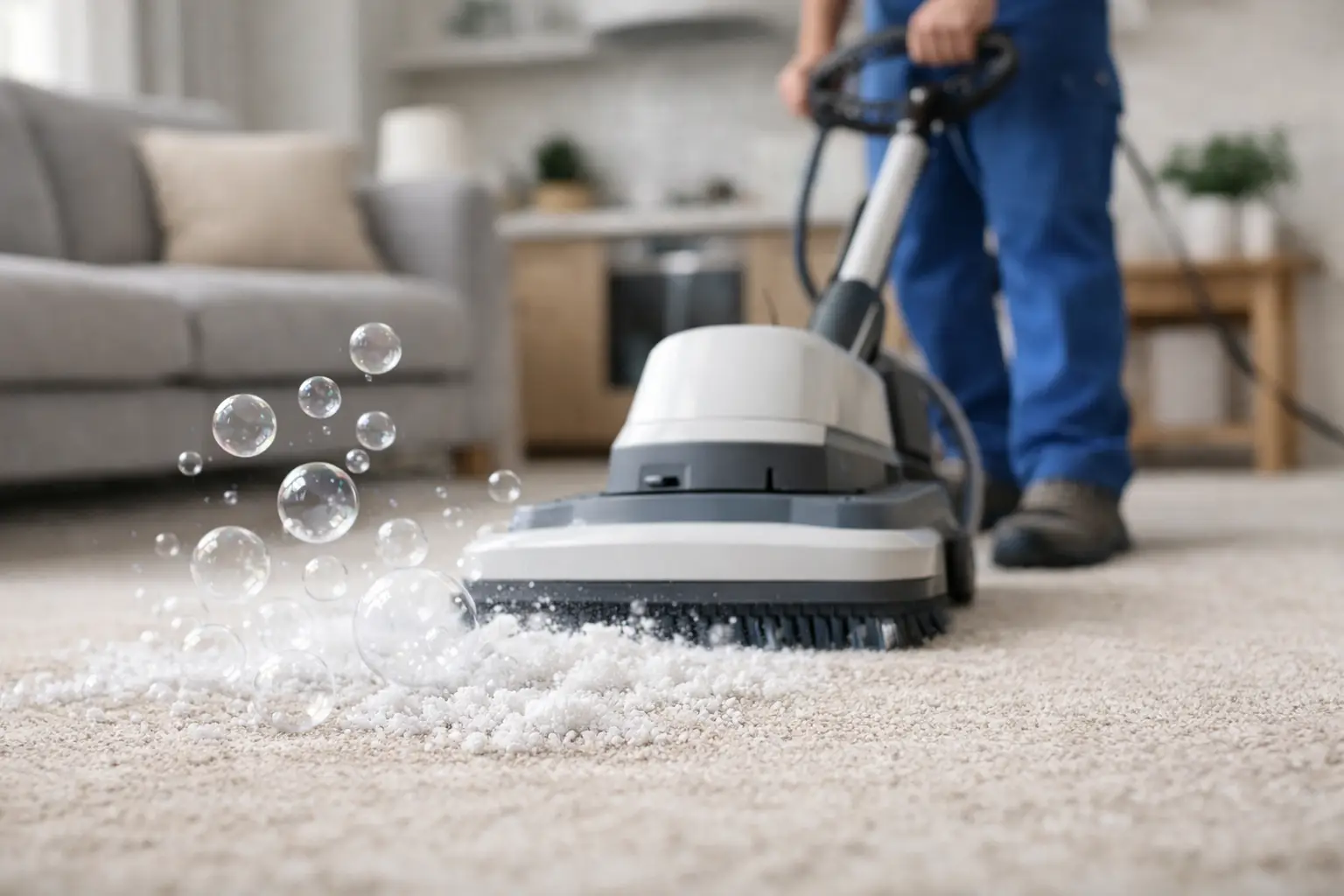
A carpet can look clean on the surface while holding tracked-in soil, pet oils, food residue, and everyday allergens below the fibers. The question of how dry carpet cleaning works matters because many homeowners want those contaminants removed without turning their living room into a damp, off-limits space for the day.
Dry carpet cleaning, often called dry-shampoo or low-moisture carpet cleaning, is designed to clean deeply with very little water. Instead of flooding the carpet and then extracting large amounts of moisture, a professional uses a controlled cleaning solution, agitation, and soil removal methods that leave the carpet barely damp. That means a fresher carpet, faster dry times, and less concern about mildew or musty odors caused by over-wetting.
How Dry Carpet Cleaning Works Step by Step
The exact process can vary based on carpet type, soil level, stains, and previous cleaning history. A well-done service starts with evaluating the carpet, not applying the same approach to every room.
Inspection and pre-treatment
First, the technician checks for heavy traffic lanes, spots, pet-related odor concerns, delicate fibers, and areas that may need extra attention. This step helps identify what is on the carpet and which treatment is appropriate. A muddy entryway needs a different approach than a bedroom with a recurring pet odor or a dining room with old food stains.
Targeted pre-treatment is then applied where needed. The goal is to loosen oily soil and embedded residue so it can be lifted from the fiber rather than simply pushed around. For homes with children or pets, the products used should be non-toxic and selected with indoor safety in mind.
Low-moisture cleaning solution
A dry-cleaning solution is applied in a light, controlled amount. “Dry” does not mean completely waterless. It means the carpet is cleaned with far less moisture than traditional steam cleaning or hot-water extraction methods.
At DryMaster of Puget Sound, the dry-shampoo approach uses a barely damp cleaning method that helps break up dirt while avoiding the soaked-carpet feeling many homeowners want to avoid. The solution is formulated to attract and release soil from the fibers without leaving behind a sticky residue that can make a carpet look dirty again quickly.
Agitation lifts soil from the fibers
Once the solution is in place, a professional machine or specialized brush system works it through the carpet pile. This agitation is where much of the cleaning action happens. It separates compacted soil from the fibers, reaches into traffic lanes, and helps the cleaning solution make contact with the dirt that vacuuming alone cannot remove.
Agitation must be matched to the carpet. A durable synthetic carpet can often handle more mechanical action than a delicate wool rug or an older carpet with worn fibers. Using the wrong method can cause fuzzing, distortion, or damage, which is one reason professional assessment is valuable.
Soil is removed and the carpet dries quickly
As soil is loosened, it is collected through the cleaning process rather than left sitting in the carpet. The carpet is then groomed as needed to help the pile dry evenly and look more uniform.
Because only a small amount of moisture is used, most carpets are ready for normal use much sooner than they would be after a heavily wet cleaning. Dry time depends on humidity, ventilation, carpet thickness, and how heavily soiled the area was, but many low-moisture cleaned carpets are dry within a few hours. Opening blinds, running ceiling fans, and keeping air moving can help.
Why Fast Drying Makes a Real Difference
Fast drying is more than a convenience. When carpet backing and padding stay wet for too long, moisture can create conditions that lead to musty odors and mildew concerns. This is especially relevant in the Puget Sound region, where damp weather can slow the drying process inside a closed home.
A low-moisture method reduces that risk by avoiding unnecessary saturation. It also makes cleaning easier to schedule around real life. Families do not have to keep children, pets, or furniture out of several rooms for an entire day, and homeowners can get back to their routines sooner.
There is also a practical appearance benefit. Over-wetting can sometimes cause wicking, where soil from deeper in the carpet or backing rises to the surface as the carpet dries. No method can promise that every old stain will disappear, but careful pre-treatment and controlled moisture help reduce the chance of this issue.
What Dry Carpet Cleaning Can Remove
Dry carpet cleaning is effective for routine buildup that makes carpets look flat, feel rough, or carry a stale odor. It is particularly useful for traffic lanes, everyday spills, pet hair and dander, tracked-in dirt, and surface oils transferred from shoes, feet, and paws.
The method can also improve the look of many common spots, including food spills, light beverage stains, and soil marks near entrances. Results depend on the stain itself. Fresh spills are generally easier to treat than a stain that has been heat-set, repeatedly treated with store products, or left in place for months.
Odor treatment is a separate consideration. If a pet accident has reached the padding or subfloor, surface cleaning alone may not solve the problem. A technician may recommend targeted odor treatment to address the source rather than temporarily covering it with fragrance.
Dry Cleaning vs. Steam Cleaning: Which Is Better?
Neither method is automatically right for every carpet or every situation. Steam cleaning, also known as hot-water extraction, uses more water and can be a good fit for certain deep-cleaning needs when it is performed correctly and dried thoroughly. However, it may require longer drying time and can be inconvenient in humid conditions or busy households.
Dry carpet cleaning is often the better choice when fast dry times, reduced moisture, and minimal disruption are priorities. It works especially well for regular maintenance, occupied homes, carpets that cannot be left wet for long, and households concerned about damp odors.
For severely neglected carpet, extensive pet contamination, or unusual stains, the best method depends on the carpet construction and the source of the problem. A trustworthy cleaning professional should explain the recommended approach clearly instead of treating every job as identical.
How to Keep Your Carpet Cleaner After Service
Professional cleaning gives the carpet a reset, but everyday habits determine how long that clean look lasts. Vacuuming regularly is the simplest way to remove dry soil before it gets ground into the fibers. High-traffic areas may need attention more often than the rest of the home.
Address spills promptly by blotting with a clean white towel rather than rubbing. Rubbing can spread the spill and push it deeper into the carpet. Avoid soaking the area with random cleaning products, too. Heavy product use can leave residue behind, attract new dirt, or make professional stain removal more difficult later.
Entry mats and a shoes-off routine can also make a noticeable difference, particularly during wet weather. For pet owners, prompt cleanup and periodic odor-focused treatment help prevent small accidents from becoming long-term carpet concerns.
When It Is Time to Schedule a Professional Cleaning
Visible stains are an obvious reason to call, but they are not the only one. Carpet may need professional attention when traffic lanes look darker than surrounding areas, rooms have a persistent stale smell, allergies seem worse indoors, or the carpet no longer feels soft after vacuuming.
Most homes benefit from professional carpet cleaning on a regular schedule, with more frequent service for homes with pets, young children, frequent guests, or high foot traffic. The right timing depends on how the space is used, not just how long it has been since the last appointment.
A clean carpet should not come with days of dampness or worries about what was used in your home. Choosing a low-moisture, family-safe cleaning approach lets you handle dirt, stains, and odors while getting your rooms back to normal quickly. When your carpet starts looking tired, a professional evaluation can help you choose the cleaning method that fits your home and your schedule.
Leave a Reply