
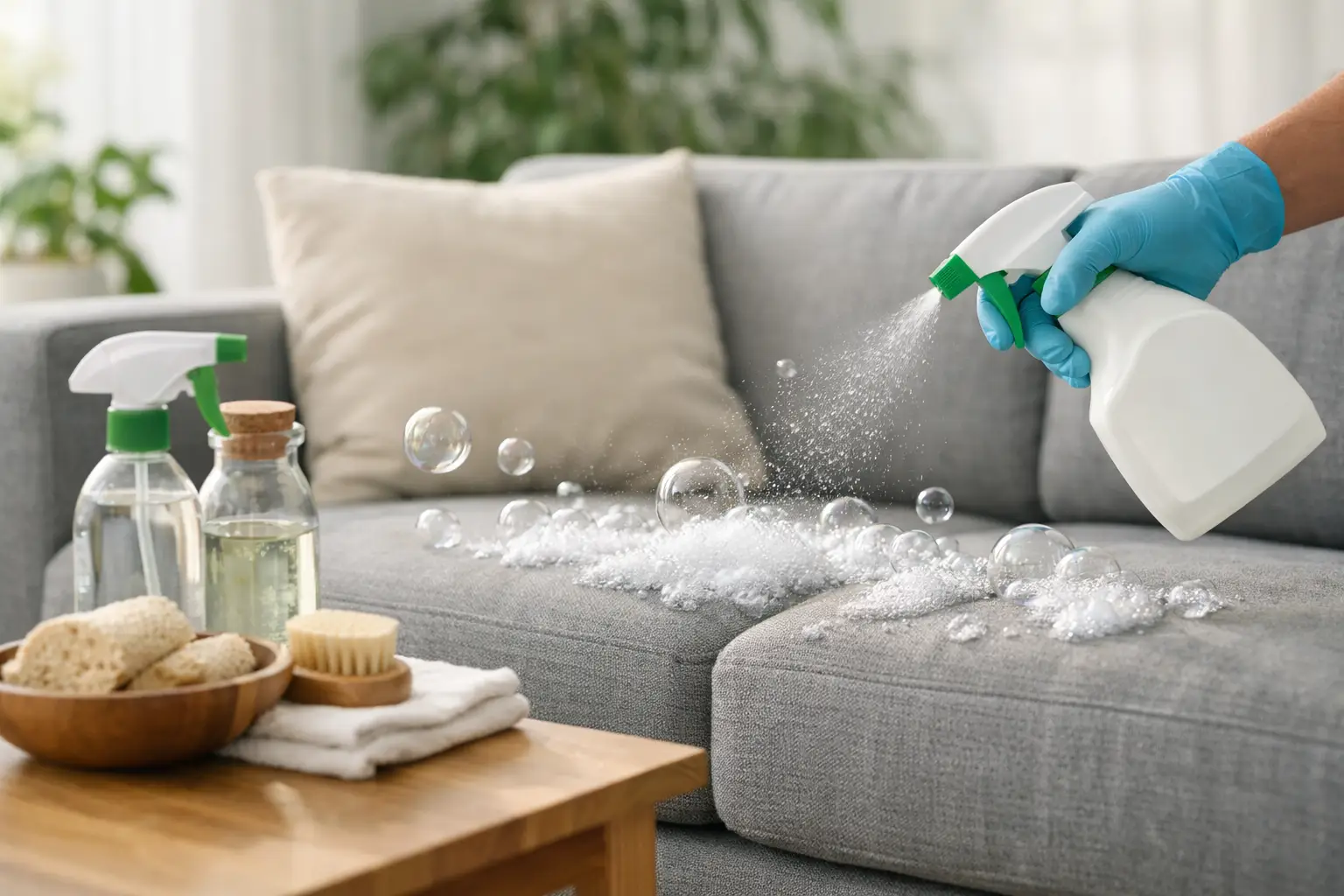
A sofa can look fine from across the room while holding weeks of pet hair, food crumbs, body oils, and the mystery spot nobody wants to claim. Non toxic sofa cleaning is about more than choosing a gentler-smelling product. It is about removing the soil that makes upholstery look dull and smell stale without leaving behind harsh residues, soaking the cushions, or creating a long drying-time problem.
For busy households, that balance matters. Children sit on the couch, pets nap on it, and guests notice it. A cleaning method should leave the fabric fresh, comfortable, and ready to use again – not wet, sticky, or heavily perfumed.
What Non Toxic Sofa Cleaning Should Mean
The phrase “non-toxic” is used widely, and it is worth looking beyond the label. A responsible upholstery cleaning approach uses products selected to be safer for people and pets when used as directed, while still addressing the dirt, oils, and odors trapped in the fabric.
It should also avoid the common trade-off of using excessive water to make a sofa appear clean. Over-wetting can push moisture into cushion foam and backing materials, where it takes far longer to dry. That can lead to musty odors, water marks, and mildew concerns, especially in thick cushions or humid conditions.
Effective cleaning is not about flooding the fabric or covering odors with fragrance. It is about applying the right solution, using the right amount of moisture, and lifting away embedded soil without damaging the upholstery.
Why Sofas Need More Than Spot Treatment
Most upholstery collects soil gradually. Body oils build up on armrests and headrests. Fine grit settles into the weave. Pet dander and hair cling to textured fabrics. A spill may leave a visible mark, but the less obvious buildup can make the entire sofa look darker or feel less fresh.
Store-bought sprays can be helpful for a small, recent spill, provided they are appropriate for the fabric. The problem is that repeated spot treatment often cleans only one patch. It can also leave soap behind, which may attract more dirt after the fabric dries.
A professional non toxic sofa cleaning service addresses the full seating area, not just the stain that caught your eye. This creates a more even result and helps restore the color and feel of the upholstery without relying on harsh chemical odors.
The Fabric Code Still Matters
Before any cleaning begins, the sofa’s care tag should guide the process. Upholstery marked W is generally made for water-based cleaning, while S fabrics require solvent-based care. WS fabrics may allow either method, and X-coded fabrics should only be vacuumed or professionally handled according to the manufacturer’s guidance.
This is not a minor detail. The wrong cleaner can cause water rings, shrinkage, color bleeding, or changes to the fabric texture. Delicate natural fibers, velvet, linen blends, and some microfiber materials need a careful test in an inconspicuous area before broader cleaning starts.
The Case for Barely Damp Cleaning
Many homeowners assume a wet sofa is proof of a thorough cleaning. In reality, excess moisture is often the part that causes trouble. Cushion foam can act like a sponge, holding water deep inside long after the surface feels dry. That is when a clean-looking sofa can develop a damp or musty smell days later.
A barely damp approach uses controlled moisture to loosen soil while avoiding saturation. DryMaster of Puget Sound uses dry-shampoo technology designed to clean upholstery deeply without steam cleaning or over-soaking the fabric. The goal is visible results with residue-free drying, so the sofa is not out of service for the rest of the day.
The right method depends on the upholstery and its condition. A heavily soiled family sectional may need more attention than a lightly used accent chair. Still, more water is not automatically better. Good cleaning comes from proper product selection, agitation, soil removal, and drying control.
What Happens During a Professional Sofa Cleaning
A dependable upholstery cleaning visit starts with an inspection. The cleaner looks at the fabric type, construction, soil level, stains, odor concerns, and any areas that may need special care. Pet accidents, greasy food spots, ink, and old mystery stains do not all respond the same way.
Next comes targeted treatment. Areas with heavier soil, such as armrests, seat cushions, and headrests, may need additional attention. The cleaning solution is applied in a controlled way and worked through the upholstery to separate dirt from the fibers.
The loosened soil is then removed without leaving the sofa drenched. A professional should be straightforward about what can reasonably be expected. Many stains improve dramatically, but permanent discoloration, dye loss, bleach damage, or an old stain that has set into the fibers may not disappear completely. Honest expectations are part of quality service.
Safe Cleaning Does Not Mean Weak Cleaning
Some people hear “eco-friendly” or “non-toxic” and worry the cleaning will not be strong enough for pets, kids, or everyday wear. A well-chosen cleaning system does not need to be harsh to be effective. It needs to match the soil and the fabric.
For example, odor treatment works best when it targets the source rather than simply adding a scent. Pet odors may be present in the surface fabric, cushion filling, or even beneath the sofa. Grease-based soil needs a different approach than a water-based drink spill. Treating every issue with the same all-purpose spray is rarely the best answer.
The practical measure is the result: Does the sofa look cleaner? Does it smell fresher without a heavy perfume? Is it dry enough to use promptly? Does it feel free of sticky residue? Those are the signs of a method that works for real homes.
How to Protect Your Sofa Between Cleanings
A few simple habits can help extend the fresh appearance of professionally cleaned upholstery. Vacuum cushions, seams, and crevices regularly, especially if you have pets. Fine dust and grit can work their way into the fabric and contribute to wear over time.
When a spill happens, blot it right away with a clean white cloth. Do not scrub, because rubbing can spread the spill and push it deeper into the fibers. Work from the outside of the spot toward the center, and avoid using a random household cleaner before checking the fabric code.
It also helps to rotate and fluff removable cushions when the manufacturer allows it. This distributes wear more evenly and prevents one favorite seat from becoming noticeably darker than the rest of the sofa.
When It Is Time to Schedule Cleaning
Visible spots are an obvious reason to call, but they are not the only one. Consider professional upholstery cleaning when the sofa has a lingering odor, looks dull around the arms and cushions, triggers allergy concerns, or no longer feels fresh after vacuuming. Homes with pets, young children, or frequent guests often benefit from more regular care.
If you are in the Key Peninsula, Gig Harbor, Port Orchard, Tacoma, or Bremerton area, choosing a local upholstery specialist can make the process easier. Ask what cleaning method will be used, whether the products are family- and pet-safe when used as directed, how long the fabric should take to dry, and whether pricing is explained before work begins.
Your sofa does a lot of daily work. Treating it with a careful, low-moisture cleaning method can keep it looking inviting without turning one cleaning appointment into a wet-cushion headache.
Leave a Reply