
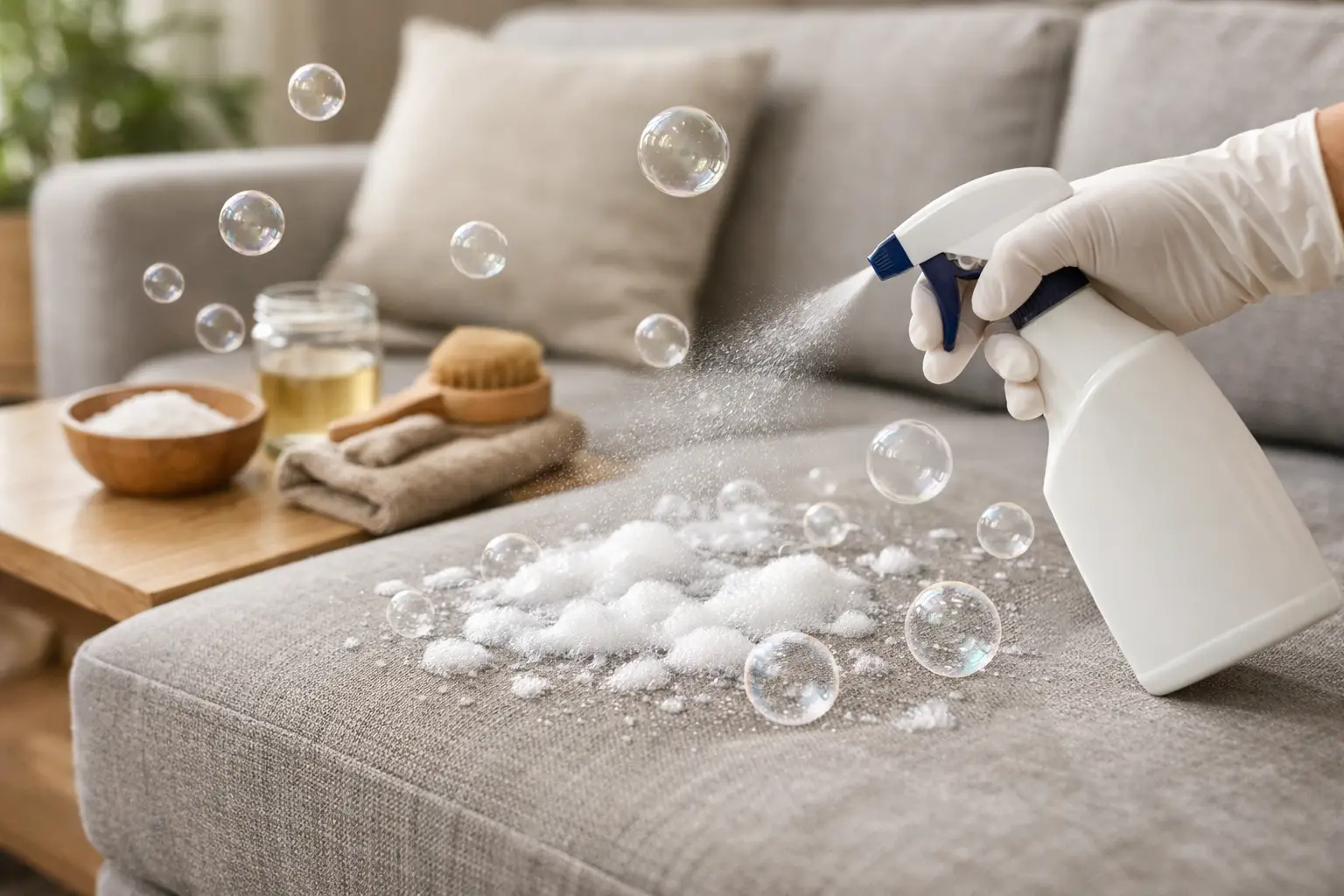
A couch can look clean and still hold onto odors from pets, takeout, spilled drinks, damp clothes, and everyday use. Knowing how to remove couch odors starts with finding the source rather than covering it with a strong fragrance. A fresh-smelling sofa should smell neutral, not like perfume layered over an old problem.
For many homes, a little surface care is enough. But if the odor returns after a day or two, is strongest around cushions, or comes with a stain, the fabric and padding may need deeper cleaning. The right approach protects your upholstery, avoids over-wetting it, and helps keep your living space comfortable for kids, pets, and guests.
Start by identifying what is causing the smell
Different odors need different treatment. Pet accidents, milk spills, body oils, smoke, and mildew do not respond the same way. Before applying any cleaner, remove blankets, pillows, and loose covers and smell the cushions, arms, back, and the area under the seat cushions separately.
If the smell is concentrated in one spot, look for a stain or damp area. If it is spread across the entire couch, the issue may be accumulated oils, pet dander, food crumbs, or general soil trapped in the fabric. A musty odor deserves extra attention because it can point to moisture that never fully dried after a spill or a previous cleaning.
Check the upholstery tag before using water or cleaning products. Codes vary, but many couches are marked W for water-based cleaning, S for solvent-based products, WS for either method, or X for vacuuming and professional cleaning only. When in doubt, test any product in a hidden area first.
Vacuum the couch thoroughly first
Odors often cling to the dust, hair, crumbs, and dander sitting below the surface. Vacuuming is not just a quick appearance fix. It removes the material that can keep feeding the odor problem.
Use an upholstery attachment and work slowly across every panel. Take off cushions when possible, vacuum both sides, and reach into seams, under cushions, along the arms, and behind the backrest. Pet owners should pay close attention to creases where hair collects. If removable covers can be washed according to their care label, clean and dry them completely before putting them back on the couch.
A vacuum will not remove odor from a dried spill deep in the cushion, but it gives every next step a better chance of working.
Use baking soda for everyday couch odors
For mild, general odors, baking soda is a simple and family-friendly first step. It can help absorb stale smells from fabric, especially when the couch is dry and there is no active stain to treat.
Sprinkle a light, even layer over the upholstery and let it sit for at least several hours. Overnight is often better for a couch that sees regular use. Keep pets and children from sitting on it while the baking soda is working, then vacuum it up carefully with an upholstery attachment.
Do not add essential oils to the baking soda. Oils can leave residue, create new stains, and may not be suitable around pets. Skip the temptation to use heavy amounts, too. Excess powder is harder to remove from seams and cushion edges, and more product does not necessarily mean better odor control.
Treat small stains without soaking the fabric
A couch should never be saturated to remove a smell. Too much moisture can push the odor deeper, leave water rings, weaken adhesive, and create conditions that allow mildew to develop. This is especially true for thick cushions and densely padded upholstery.
For a recent food or drink spill, blot first with a clean white towel. Press gently to absorb moisture, but do not scrub. Scrubbing can spread the stain and rough up the fabric fibers.
If the care tag allows water-based cleaning, use a small amount of upholstery-safe cleaner or a mild solution made for the fabric. Apply it to a towel rather than pouring it directly onto the couch. Blot the affected area from the outside toward the center, then use a second dry towel to lift remaining moisture.
Let the spot dry with good airflow. Open a window if conditions allow, run a fan nearby, or use your home’s ventilation. Avoid sitting on the area until it is fully dry. If the odor remains once the fabric dries, the spill likely reached the cushion fill and may need professional odor treatment.
How to remove couch odors from pets
Pet odors are usually more stubborn because they involve hair, dander, body oils, and sometimes urine. Vacuuming and baking soda can help with the general dog or cat smell, but urine requires an enzyme-based odor remover designed for upholstery. Enzymes break down the organic material causing the odor instead of masking it.
Use the product only if it is compatible with your couch’s cleaning code, and follow the label directions closely. The treatment must reach the same depth as the accident to work. That is the challenge with cushions: applying too little may not reach the source, while applying too much can leave the cushion wet inside.
For an older pet accident, you may notice the smell gets stronger on humid days. That is often a sign that residue remains in the fabric or cushion padding. Repeated sprays may make the couch smell temporarily better, but a deeper treatment is usually needed to remove the source.
Do not mask musty or smoky odors
Fabric sprays, candles, and plug-in fragrances can make a room smell pleasant for a few hours, but they rarely solve a couch odor. In some cases, they combine with the existing smell and make the air feel heavier.
A musty odor requires checking for moisture. Look beneath the couch, under cushions, and near nearby windows or exterior walls for signs of dampness. If there has been a leak, flood, or prolonged moisture exposure, dry conditions must be restored before cleaning alone can help. A couch that smells musty after being cleaned may have been left too wet during the process.
Smoke odor can also settle deeply into upholstery, especially in homes where smoking occurred regularly or after a small kitchen fire. Surface deodorizing may help briefly, but embedded smoke particles often require a professional cleaning method that lifts soil and odor residue without over-saturating the fabric.
When professional upholstery cleaning makes sense
Professional help is a practical choice when the odor keeps returning, the source is unknown, the couch has large or repeated pet accidents, or the upholstery cannot safely be cleaned with household products. It is also wise for delicate fabrics, older furniture, and couches with fixed cushions that hold odor in the padding.
The cleaning method matters. Steam or overly wet cleaning can leave thick upholstery damp for too long, increasing the risk of mildew odors. A barely damp process is often a better fit for upholstered furniture because it targets soil and odor while limiting moisture and drying time.
DryMaster of Puget Sound uses dry-shampoo cleaning technology and family- and pet-safe solutions for upholstery care. For homeowners in Gig Harbor, Tacoma, Port Orchard, and nearby communities, professional cleaning can be especially helpful when a well-loved couch needs a reset without the hassle of waiting days for it to dry.
Keep fresh odors from coming back
Once the couch is clean, small habits make a noticeable difference. Vacuum upholstery regularly, especially if pets use the furniture. Clean spills promptly, wash throws and removable covers on schedule, and avoid eating messy foods on cushions when possible.
If pets have a favorite spot, place a washable blanket over it and clean that blanket frequently. Keep the room ventilated, particularly during wet Puget Sound weather, and avoid putting damp laundry or wet outerwear on upholstered furniture. These simple steps reduce the oils and moisture that create lingering smells over time.
A couch does not need to smell like a fragrance aisle to feel clean. Neutral, dry, and comfortable is the goal. When home care no longer changes the odor, treating the fabric and cushion padding correctly can make the room feel welcoming again.
Leave a Reply