A quality oriental rug cleaning service should do more than make a rug look brighter for a few days. It should remove the ground-in soil, pet odors, and everyday buildup that settle deep between fibers while respecting the rug’s dyes, backing, fringe, and construction. For homeowners, that means cleaner floors without the worry of a soaked rug, lingering chemical smell, or a treatment that is too harsh for a piece you value.
Oriental rugs often live in the busiest parts of a home: entryways, living rooms, dining areas, and hallways. They collect more than visible dirt. Fine grit works its way down into the pile, oils from bare feet cling to fibers, and pet accidents can leave odor below the surface. Regular vacuuming helps, but it cannot remove every contaminant that has settled into the rug over time.
Why Oriental Rugs Need a Different Approach
The term “oriental rug” covers many styles, materials, and ages. Some are machine-made with durable synthetic fibers. Others are hand-knotted wool rugs, vintage pieces with fragile fringe, or silk rugs that need very careful handling. A method that works well for one rug may be unsuitable for another.
That is why the first step should be an inspection, not a one-size-fits-all cleaning routine. A professional should consider the rug’s fiber type, color stability, condition, stains, backing, and any signs of previous damage. Bleeding dyes, worn edges, weakened areas, and older repairs all affect how the rug should be cleaned.
Too much moisture is a common concern. When a rug is heavily saturated, the backing and foundation can stay wet long after the surface feels dry. That can create musty odors, increase the risk of mildew, and in some cases lead to color transfer or shrinkage. A barely damp cleaning approach can be an excellent option for many area rugs because it focuses on deep soil removal without leaving the rug waterlogged. Still, very delicate silk, antique, or heavily soiled rugs may require a specialized process based on their specific condition.
What an Oriental Rug Cleaning Service Should Remove
A rug can look fairly clean from across the room and still hold a surprising amount of soil. Dust and dry particulate matter act like sandpaper when people walk across the rug, gradually wearing down fibers. Professional cleaning helps remove that hidden grit before it causes more damage.
A thorough service can also address everyday issues such as food spots, tracked-in mud, pet hair, body oils, and stale odors. The goal is not to make unrealistic promises that every stain will disappear. Some stains have permanently changed the fiber or dye, especially if they were allowed to sit for a long time. A trustworthy cleaner will explain what is likely to improve, what may remain, and whether a stain needs extra attention.
Odors deserve the same careful approach. Covering an odor with fragrance is not a solution. Pet urine, smoke, and mildew-like smells need treatment that targets the source rather than simply masking it. For homes with children and pets, non-toxic products and a low-moisture process can provide welcome peace of mind.
The Value of Faster, Residue-Free Drying
Homeowners often put off rug cleaning because they picture a wet rug taking days to dry in the middle of the living room. That inconvenience is real with some cleaning methods. A rug that stays damp can hold onto odors and leave the area difficult to use.
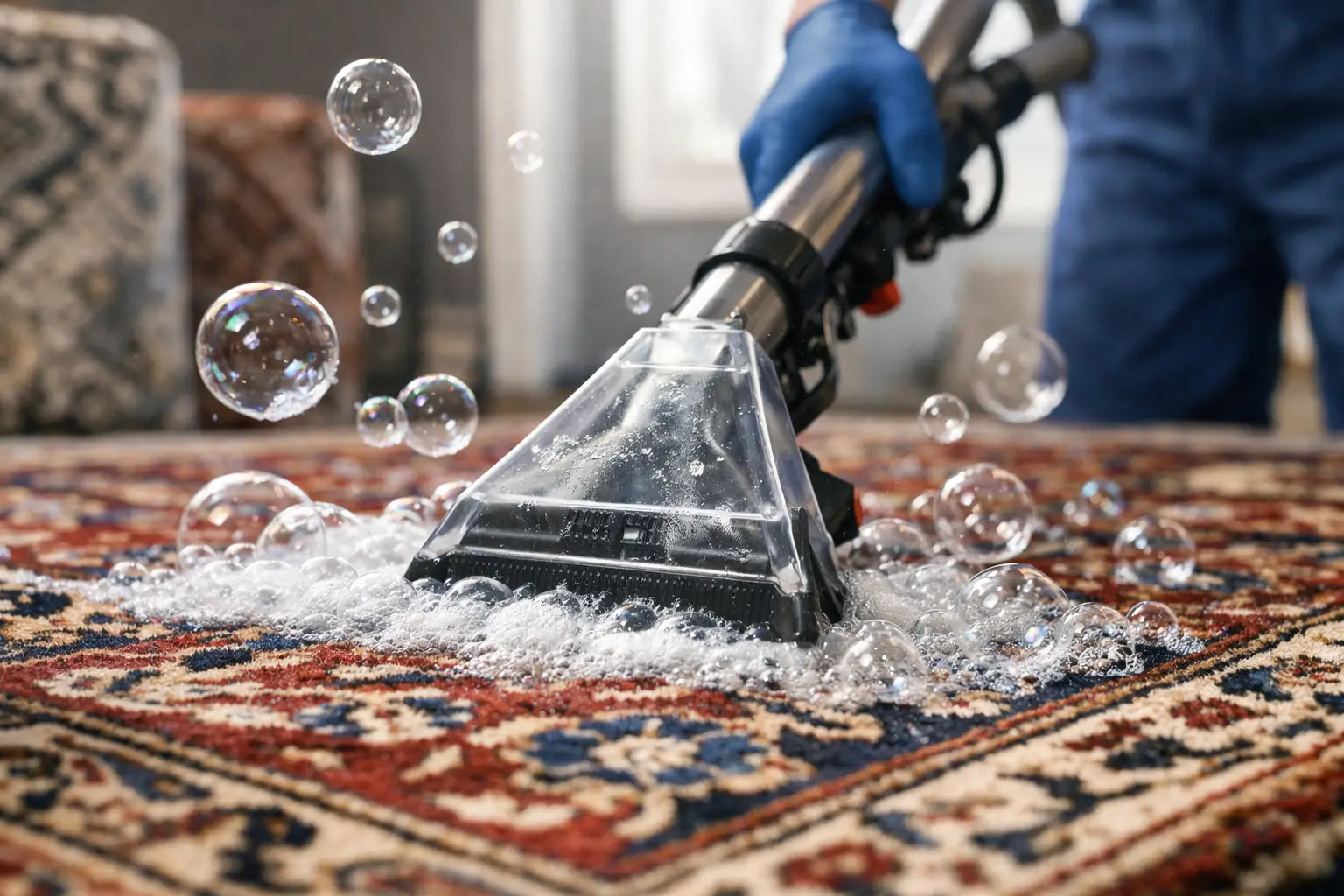
DryMaster’s dry-shampoo technology uses a barely damp process designed to lift soil and refresh fibers without excessive water. Rugs dry faster, helping you get your space back sooner. Just as important, the process is intended to leave no sticky residue behind. Residue can attract new soil quickly, making a freshly cleaned rug look dull again sooner than expected.
Fast drying does not mean rushed cleaning. It means using an approach that balances cleaning power with the needs of the material. The right service should leave the rug cleaner, fresher, and comfortable to place back in your home without an extended drying-time hassle.
How to Prepare Your Rug for Cleaning
A little preparation can make an appointment go more smoothly. Before the cleaning team arrives, remove small furniture, breakables, baskets, and décor from the rug when possible. Point out spots, odors, pet areas, and places where the rug has been exposed to heavy traffic. This gives the technician a clearer picture of what needs attention.
If a rug has fringe, loose threads, curling corners, or existing damage, mention it before cleaning begins. The same goes for rugs that have been stored in a garage, basement, or other damp area. Clear communication helps the cleaner choose the safest method and set appropriate expectations.
For pet-related accidents, let the cleaner know whether the issue is recent or recurring. A fresh surface spot is different from an odor that has reached the backing or the floor beneath the rug. Treating the right level of the problem is the best path to a lasting result.
Signs Your Rug Is Ready for Professional Cleaning
Most rugs do not need cleaning on a fixed calendar date. The right schedule depends on foot traffic, pets, children, allergies, and where the rug sits in the home. A rug in a quiet guest room may need service less often than one near a front door or under a dining table.
Watch for these signs that it is time to schedule professional care:
- The colors look dull even after vacuuming.
- The rug has a stale, pet, or smoke-related odor.
- Footpaths are visibly darker or feel matted down.
- Spills, spots, or sticky residue keep reappearing.
- Dust seems to collect quickly around the rug or aggravate allergies.
- The rug feels gritty, stiff, or less soft underfoot.
For many active households, professional rug cleaning every 12 to 18 months is a practical starting point. Homes with multiple pets, young children, or high traffic may benefit from more frequent service. On the other hand, cleaning too aggressively or using unsuitable products can be hard on delicate fibers, so frequency should always be matched to the rug and its use.
Questions Worth Asking Before You Book
Choosing a cleaner should not feel like a guessing game. Ask whether the company evaluates fiber type and dye stability, what moisture level its process uses, and how it handles pet odors or difficult stains. It is also reasonable to ask about drying time, cleaning products, and whether pricing is explained before work begins.
Be cautious of vague promises that every stain will vanish or that all rugs can be handled exactly the same way. Good service is built on honest recommendations. A cleaner should be willing to explain when a low-moisture treatment is appropriate and when a specialty rug needs another level of care.
For homeowners in Gig Harbor, Port Orchard, Tacoma, Bremerton, and the Key Peninsula, local service also matters. A dependable professional understands that you need clear scheduling, straightforward communication, and a rug that is ready to use again without disrupting the household.
A well-cared-for oriental rug can stay beautiful for years, even in a busy home. When dirt, odors, or stains begin to take away from it, choose a cleaning service that treats the rug as more than another floor covering. The right care protects what you see, what you breathe, and the comfort of the room where your family gathers.
Leave a Reply