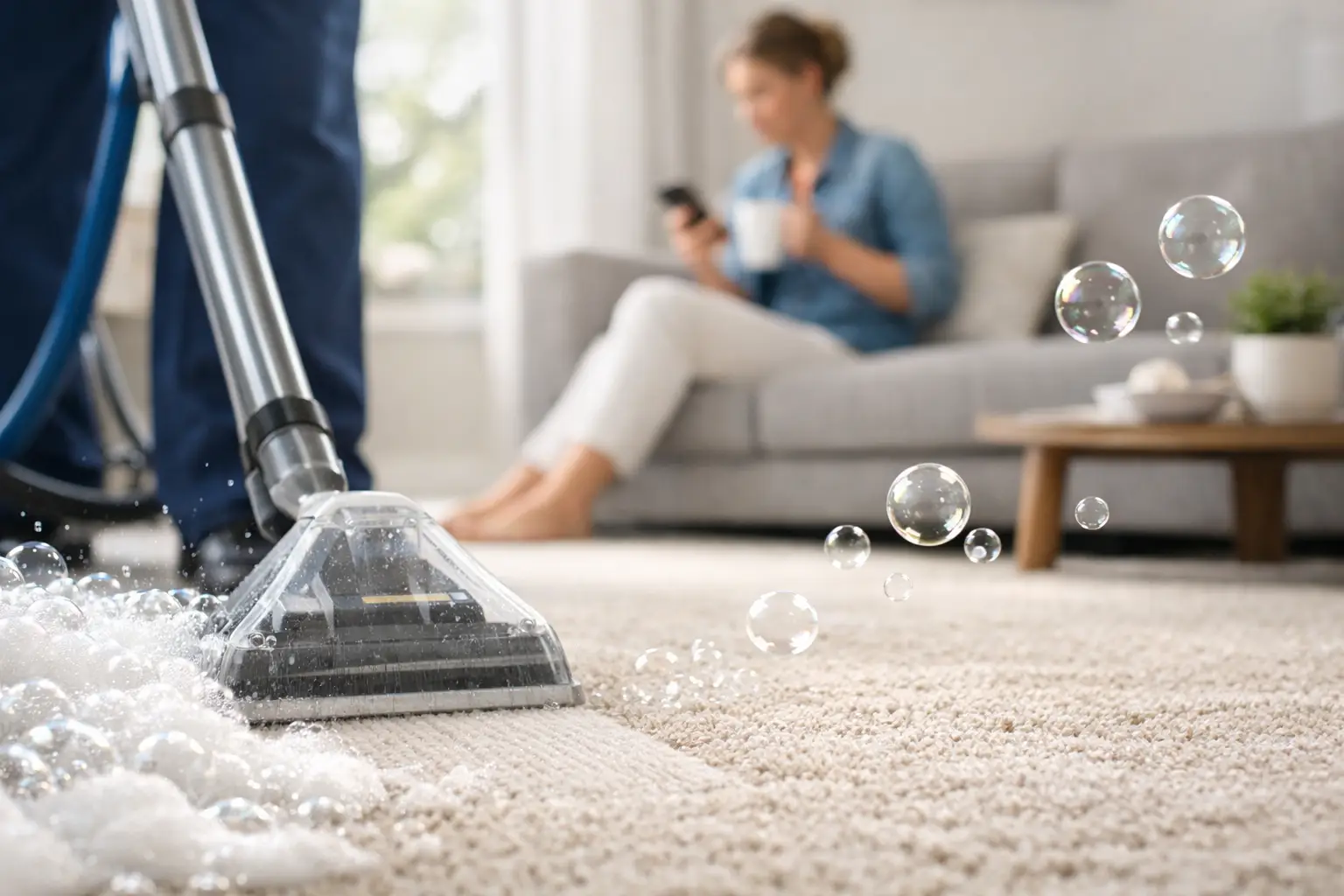
A clean carpet should not put your home out of commission for the rest of the day. Fast drying carpet cleaning gives families, pet owners, and busy households a practical alternative to treatments that leave floors wet, rooms closed off, and furniture waiting to be moved back.
When carpet is cleaned with too much water, the inconvenience is immediate. Children and pets need to stay off the floor, damp fibers can hold onto odors, and humid Puget Sound weather may extend drying time even further. A barely damp cleaning method can remove built-up soil and freshen carpet without turning a simple service appointment into an all-day disruption.
Why Drying Time Matters After Carpet Cleaning
Drying time is more than a convenience issue. Carpet that stays wet for too long can feel uncomfortable underfoot, attract new dirt as people walk across it, and create conditions where musty smells may develop. That is especially frustrating when the purpose of cleaning was to make the home feel fresher.
Traditional hot-water extraction can be effective in the right situation, particularly when a carpet has heavy embedded soil and a technician can use proper equipment, airflow, and extraction. But results depend heavily on how much water is applied and removed. If too much moisture remains in the carpet or padding, drying can take many hours or longer in cool, damp conditions.
For many everyday residential needs, a low-moisture approach is a better fit. It focuses on lifting soil and treating spots while using only the moisture needed to clean the fibers. The carpet is left barely damp rather than saturated, so normal use can resume much sooner.
How Fast Drying Carpet Cleaning Works
Fast drying carpet cleaning is not about rushing through the job or masking odors with fragrance. It is about using the right amount of cleaning solution, agitation, and soil removal for the carpet’s condition. A professional dry-shampoo process works into the carpet fibers to loosen dirt, oils, pet dander, and everyday residue without flooding the backing.
The cleaning solution and technique matter. A quality low-moisture system should leave the carpet feeling clean rather than sticky or crunchy. Excess cleaning residue can pull in dirt after a service, making a carpet look dull again sooner than expected. The goal is a clean, refreshed surface with no soapy film left behind.
At DryMaster of Puget Sound, the approach is designed around barely damp cleaning. That makes it a strong option for households that want visible results without the concerns that often come with over-soaking, including extended drying, mildew risk, and rooms that cannot be used right away.
What You Can Expect After a Low-Moisture Service
Most carpets feel dry or nearly dry soon after the appointment, though the exact timing depends on the carpet type, soil level, indoor temperature, ventilation, and humidity. A dense plush carpet may hold moisture a little longer than a low-pile loop carpet. A room with limited airflow may also take longer than a bright, well-ventilated space.
Even so, the difference between barely damp and fully wet is significant. You can often return furniture to normal placement sooner, keep daily routines moving, and avoid stepping around damp rooms for hours. For homes with pets, children, or limited space, that flexibility is a real benefit.
When This Method Is a Smart Choice
Low-moisture carpet cleaning is especially useful for maintenance cleaning, pet-related odors, tracked-in dirt, food spills, and the general dullness that builds up in active homes. It works well when you need the living room, hallway, bedroom, or stairs ready for use quickly.
It can also be an excellent choice before guests arrive, after a pet accident has been treated, or when preparing a home for sale. A clean carpet changes how a room looks and feels, but waiting all day for wet flooring to dry is rarely convenient.
The same practical benefit applies to many small businesses. Offices, waiting areas, and professional spaces cannot always be closed for a lengthy drying period. A fast-drying process helps maintain a clean appearance while minimizing interruption to customers and staff.
That said, no single method is right for every condition. Carpets affected by a major flood, sewage backup, extensive mold, or deep water damage need specialized restoration work, not a standard cleaning appointment. Very old stains, permanent color loss, bleach spots, and wear patterns may also not fully disappear. A trustworthy cleaning professional should set clear expectations rather than promise that every mark can be erased.
A Better Option for Families and Pets
A clean home should not come with worries about harsh products or lingering chemical odors. Homeowners often choose fast-drying methods because they want a process that is effective while still being appropriate for the people and animals who use the space every day.
Eco-friendly, non-toxic cleaning solutions can help address the dirt and odors that collect in carpet without adding unnecessary concerns. This matters in nurseries, family rooms, bedrooms, and pet areas, where people spend time close to the floor.
Pet households have an additional challenge: odors can settle below the surface. Surface cleaning alone may improve the appearance of carpet without fully addressing the source of a smell. Proper odor treatment should target the affected area and consider whether the issue is recent, recurring, or widespread. If urine has reached the padding or subfloor, more involved treatment may be needed. Honest assessment protects you from paying for a quick fix that does not last.
Getting the Best Results From Your Appointment
A little preparation helps the service focus on what matters. Pick up small items, toys, and breakables from the carpeted areas. If possible, clear lightweight furniture and make note of specific spots, odors, or high-traffic lanes you want addressed. Pointing them out at the start helps ensure they receive proper attention.
Vacuuming beforehand can be useful, especially in homes with heavy pet hair or loose debris, but it is not a substitute for professional cleaning. Vacuuming removes dry surface soil. Professional treatment addresses the oils, embedded dirt, and residues that make carpet look worn even when it has been vacuumed regularly.
After cleaning, follow any care guidance provided by your technician. Give the carpet a little time to finish drying, use fans or normal ventilation if needed, and wait until it is fully dry before placing protective pads or heavy furniture back in place. Avoid using store-bought spot cleaners right away unless recommended, since mixing products can leave residue or affect the treated area.
Keeping Carpet Cleaner Between Visits
Regular vacuuming is the simplest way to extend the life of a professional cleaning. Focus on entryways, hallways, stairs, and the paths people use most often. Address spills promptly by blotting, not rubbing, with a clean white cloth. Rubbing can push a spill deeper into the fibers and spread the stain.
For pet accidents, act quickly and avoid relying on perfume-heavy products that only cover the odor. The faster the affected area is treated, the better the chance of preventing a lingering smell or recurring spot.
Choose Cleaning That Works With Your Schedule
Carpet cleaning should leave your home cleaner, fresher, and easier to enjoy, not temporarily unusable. Fast-drying service is a practical choice for households that want deep cleaning without soaked carpet, long waits, or unnecessary moisture.
Whether you are managing muddy shoes in Gig Harbor, pet hair in Tacoma, or a busy family room anywhere in the Key Peninsula area, the right cleaning method lets you care for your carpet without putting life on hold. A clean, nearly dry floor is a simple result that makes a noticeable difference the same day.
Leave a Reply