A pet can make a favorite chair, sofa, or sectional feel like home. Unfortunately, that same furniture can hold onto more than fur. If you are asking, “can upholstery cleaning remove pet smells,” the short answer is yes – when the cleaning process reaches the source of the odor instead of only masking it.
Pet odors are rarely a surface-only problem. Urine, saliva, dander, body oils, and damp paws can settle below the fabric and into the cushion filling. A quick spray may make the room smell better for a few hours, but the odor often returns when the fabric gets warm, humid, or slightly damp. Effective upholstery cleaning focuses on removing the odor-causing residue while treating your furniture carefully.
Can Upholstery Cleaning Remove Pet Smells?
Professional upholstery cleaning can remove many pet smells, especially when the odor is recent or limited to the fabric surface. It lifts soil, oils, hair, and organic residue that ordinary vacuuming cannot reach. This makes a real difference in the freshness of sofas, recliners, dining chairs, and other upholstered pieces where pets regularly rest.
Whether the smell disappears completely depends on where it has traveled. If a pet accident soaked through the upholstery fabric, cushion foam, backing, and even the frame beneath, the treatment needs to address each affected layer. Cleaning only the visible fabric may improve the smell, but it may not fully solve the problem.
That is why a professional inspection matters. An experienced cleaner can identify the fabric type, locate the strongest odor areas, and determine whether standard upholstery cleaning is enough or whether targeted odor treatment is needed. The goal is a cleaner, fresher piece of furniture without unnecessary soaking or harsh chemicals.
Why Pet Odors Linger in Furniture
Soft furniture is built in layers. The outer fabric is only the first layer, followed by padding, foam, webbing, and sometimes wood. Pet urine can move quickly through these materials before it is noticed. As it dries, it leaves behind residue that can reactivate with moisture in the air.
Older accidents can be especially stubborn. Even when a stain is no longer visible, odor-causing deposits may remain deep in the cushion. This is also why a sofa can smell fine most days, then suddenly develop a strong pet odor after a rainy Puget Sound week or when the heat is running.
Pets that lie on furniture every day can create a different kind of odor. Natural body oils, dander, and outdoor debris collect gradually, particularly on armrests, seat cushions, and favorite sleeping spots. Regular upholstery cleaning can remove that buildup before the entire room starts to smell stale.
What Effective Odor Removal Looks Like
A dependable pet odor service does more than add fragrance. It begins with cleaning the upholstery to remove dirt and residue that trap odor. If an accident is involved, the affected area may need a separate odor treatment designed to break down organic material rather than cover it up.
The right method also protects the furniture. Over-wetting upholstery can push contaminants deeper, leave water marks, or create a long drying period. It can also create conditions where mildew becomes a concern, especially in thick cushions and humid weather.
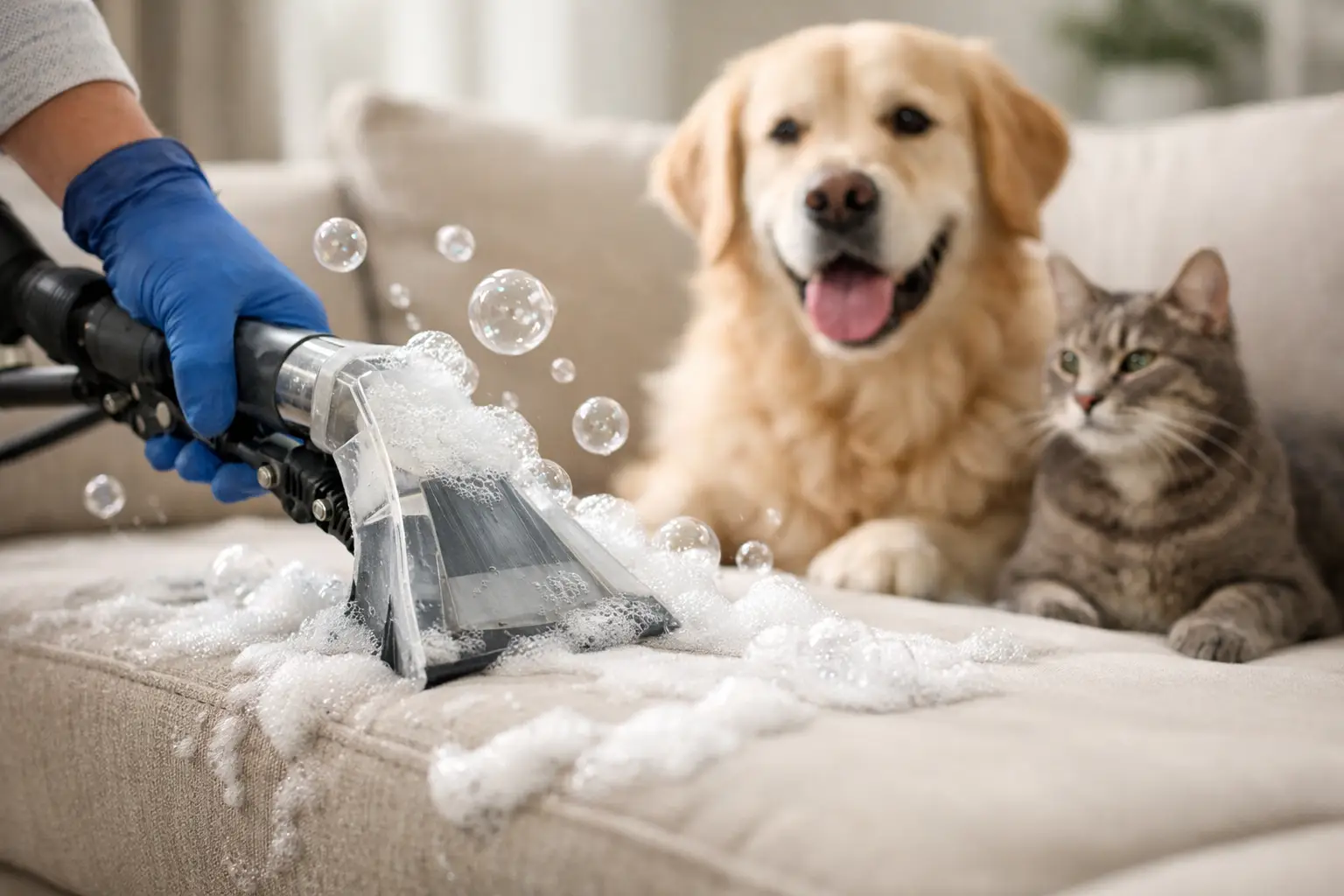
DryMaster of Puget Sound uses a barely damp, dry-shampoo cleaning approach that is designed to clean deeply without saturating the furniture. This helps fabrics dry quickly, reduces the risk of mildew, and avoids the soggy feel that can come with steam-heavy methods. The cleaning solutions are non-toxic and family- and pet-safe, so you do not have to choose between a fresher home and a safer one.
When Can Upholstery Cleaning Remove Pet Smells Completely?
Many pet odors can be removed completely when they are treated early and have not spread far beyond the upholstery surface. A couch that smells like a dog after months of lounging, for example, often responds very well to a thorough professional cleaning. The same is true for light saliva odor, dander buildup, and surface-level accidents caught quickly.
Deep or repeated urine contamination is more variable. If the urine reached the foam insert or wood frame, a cleaner may need to treat beneath the fabric or recommend cleaning the cushion components separately. In severe cases, replacement of a foam insert may be the most practical option. A reputable professional should explain this clearly rather than promise a result that the condition of the furniture cannot support.
Fabric type also affects results. Synthetic performance fabrics are often easier to clean than delicate natural fibers or older upholstery with weakened dyes. Microfiber, cotton blends, velvet, and wool each require a different level of care. Testing and using the proper solution helps prevent color loss, texture changes, and avoidable damage.
What to Do Before Your Appointment
You do not need to scrub the furniture or use several store-bought sprays before professional cleaning. In fact, heavy use of deodorizer, vinegar, or soap can leave residue behind and make it harder to assess the original odor. If there is a fresh accident, blot it gently with clean white towels. Press down to absorb moisture, but do not rub the spot deeper into the fabric.
Vacuum loose pet hair if possible, especially along cushion seams and under removable cushions. Then make a note of where accidents happened, even if the stain has faded. Pointing out those areas helps the cleaner focus treatment where it is most needed.
Keep pets off the furniture until it is dry after cleaning. Once it is ready to use, clean throws or washable pet blankets can help protect the upholstery from new oils, hair, and damp paws. This simple habit can extend the fresh results between appointments.
How to Keep Furniture Smelling Fresh Between Cleanings
Regular care prevents small odor issues from becoming deep-set problems. Vacuum upholstered furniture weekly if pets use it often, including seams, crevices, and the area beneath cushions. Wash removable covers according to their care labels, and wash pet bedding regularly so odors are not carried back onto the sofa.
Address accidents promptly, but be selective about home remedies. Strong perfumes may combine with pet odor instead of removing it. Too much water can spread urine through the cushion. Avoid using bleach, ammonia, or untested cleaners, as they can damage fabric and may create odors that encourage some pets to revisit the same spot.
If the smell returns after you clean a spot, that is a sign the source may be below the surface. Scheduling service sooner can be more effective than repeating at-home treatments and adding more moisture to the cushion.
A Fresh Sofa Should Not Come With a Long Drying Wait
Pet odors can make an otherwise clean room feel uncomfortable, but you do not have to live with a lingering smell or risk soaking your furniture to deal with it. Professional upholstery cleaning can make a major difference when it is matched to the source of the odor and the needs of the fabric.
For homes with pets, occasional deep cleaning is part of keeping the spaces you share clean, comfortable, and welcoming. When your favorite seat smells fresh again, it is easier to enjoy the company that put the fur there in the first place.
Leave a Reply