
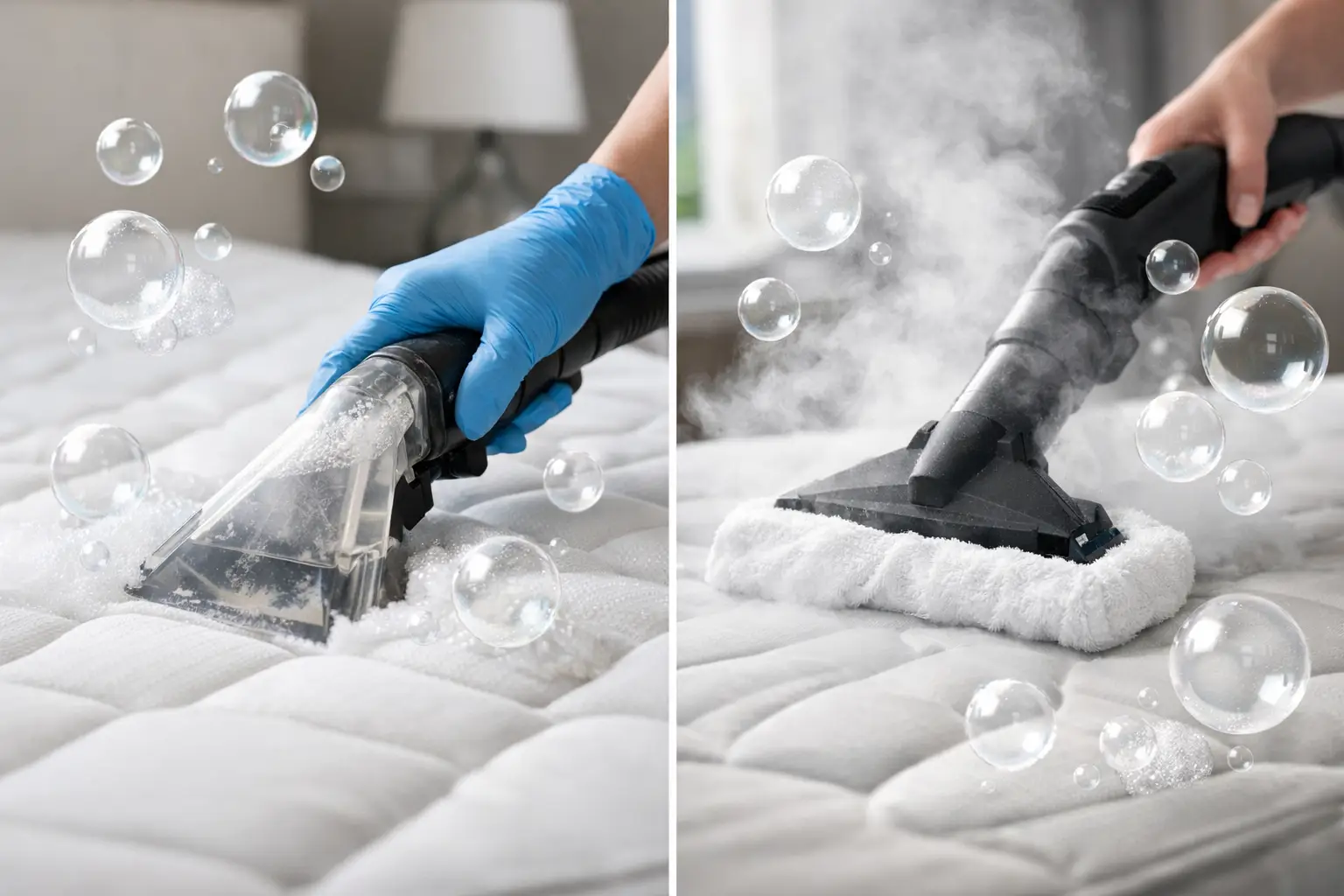
A mattress can look clean while holding the things you would rather not sleep near: body oils, perspiration, pet dander, dust, skin flakes, and odors that settle below the surface. When comparing mattress cleaning versus steam cleaning, the real question is not which method sounds stronger. It is which method can clean the fabric and padding effectively without leaving your bed damp for hours or creating conditions that encourage mildew.
For busy households, the best choice usually comes down to moisture control, drying time, and the specific issue you need addressed. A fresh spill requires a different approach than a long-standing odor, allergy concerns, or a mattress that simply needs routine sanitizing.
Mattress Cleaning Versus Steam Cleaning: The Main Difference
Traditional steam cleaning uses hot water and extraction to flush soil from fabric. It can be useful on certain durable surfaces, especially when powerful rinsing is needed. A mattress, however, is not a flat carpet. It is a thick, layered piece of furniture made with absorbent fabric, foam, fiber, batting, springs, adhesives, and sometimes natural materials. Once moisture enters those layers, it is difficult to remove completely.
Professional mattress cleaning with a low-moisture or dry-shampoo method is designed to treat the surface and upper layers without soaking the bed. Cleaning agents loosen oils, soil, and odor-causing residue, then the material is carefully removed. The goal is a clean, refreshed mattress that dries quickly enough to return to use without an extended wait.
Neither method is automatically right in every situation. Steam may be considered for a small, targeted surface treatment when the mattress manufacturer allows it and drying conditions are excellent. But for whole-mattress cleaning, excessive water is often the bigger risk.
Why Too Much Moisture Is a Mattress Problem
A mattress may feel dry on top while moisture remains deeper in the padding. That is where problems can start. Internal dampness can lead to musty odors, encourage mildew growth, and leave a mattress feeling unpleasant long after the appointment is over. In the Puget Sound area, where cool or damp weather can make indoor drying slower, this is a practical concern rather than a minor inconvenience.
Steam cleaning also requires careful temperature and moisture management. Too much heat or water can affect some foam layers, glues, or delicate mattress fabrics. Pillow-top, memory foam, hybrid, and specialty mattresses may be particularly sensitive. A cleaning method should respect the construction of the mattress rather than treat every bed the same way.
Low-moisture mattress cleaning avoids the common “wet bed” problem. It is especially helpful for families who need the mattress ready sooner, renters preparing a room for a new occupant, and homeowners who do not have a dry, well-ventilated place to leave a mattress airing out all day.
Faster Drying Means Less Disruption
Drying time matters because a mattress is part of your daily routine. You should not have to wonder whether it will be ready at bedtime or move everyone around the house because a bed is still damp.
A barely damp process can provide visible freshening and soil removal with far less downtime than a water-heavy approach. It also makes it easier to clean multiple mattresses in one visit without turning bedrooms into drying areas. For homes with children, pets, guests, or limited spare rooms, that convenience makes a real difference.
What Each Method Can Handle
The condition of the mattress should guide the service, not a one-size-fits-all promise. General buildup from everyday use is often well suited to a professional low-moisture cleaning and sanitizing service. This type of cleaning can lift surface soil, reduce everyday odors, and refresh the sleep surface without oversaturation.
Steam cleaning may seem like the obvious answer for strong odors because heat feels powerful. Yet heat alone does not solve every odor source. Urine, vomit, pet accidents, and other biological contamination usually need the correct odor treatment first. If the source is not broken down and removed, adding moisture can leave the smell behind or make it more noticeable as the mattress dries.
For old stains, expectations should also be realistic. A professional can often improve discoloration and remove residue, but stains that have set deep into foam or fibers may not disappear completely. Cleaning is still valuable because it addresses the soil and odor behind the visible mark, not just its appearance.
If a mattress has widespread mold, major water damage, a pest issue, or extensive bodily-fluid contamination, replacement may be the safer choice. A reputable cleaner should tell you when cleaning is no longer the responsible recommendation.
Safety and Sanitizing Without Harsh Residue
Your mattress is one of the most personal soft surfaces in your home. Any product used on it should be selected with care, particularly when children, pets, asthma, allergies, or scent sensitivities are part of the household.
A family-safe, non-toxic cleaning approach focuses on removing soil and odor while avoiding heavy perfumes and sticky chemical residue. Residue matters because it can leave fabrics feeling stiff, attract new dirt, or create an artificial fragrance that covers a problem instead of solving it.
Sanitizing also deserves a clear definition. No cleaning service can make an old mattress brand new or promise a medical-grade environment. What professional cleaning can do is reduce the dust, oils, allergens, and odor-causing buildup that regular vacuuming does not fully address. That is a practical improvement for a cleaner, fresher sleep space.
Do Not Try to Soak a Mattress at Home
Home spot cleaning is useful when done quickly and gently, but a mattress should never be saturated with a rental machine, heavy spray bottle, or household cleaner. Blot spills with a clean white towel, use a small amount of an appropriate cleaner, and allow plenty of airflow. Avoid rubbing aggressively, which can spread the stain and push it deeper into the fabric.
For a fresh accident, address it as soon as possible. Remove bedding, blot moisture, and avoid making the area wetter than it already is. If odor remains after the surface dries, professional treatment can target the source without turning a small issue into a moisture problem.
When Low-Moisture Mattress Cleaning Is the Better Choice
For most residential mattresses, low-moisture cleaning is the practical option when you want deep freshening with minimal disruption. It is a strong fit for routine maintenance, stale odors, dust and dander buildup, light-to-moderate staining, and mattresses that must be usable again soon.
It can also be the smarter choice for thick pillow-top and foam mattresses, where water extraction may not reach and remove moisture from the interior layers. The less unnecessary water introduced into the mattress, the less chance of a lingering damp smell or extended dry time.
DryMaster of Puget Sound uses a barely damp, dry-shampoo approach to clean interior fabrics while helping prevent over-soaking and mildew concerns. For homeowners in Gig Harbor, Tacoma, Port Orchard, and nearby communities, that means cleaner mattresses without the hassle of waiting around for a soaked bed to dry.
How Often Should a Mattress Be Professionally Cleaned?
Most households benefit from professional mattress cleaning about once a year. Homes with pets that sleep on the bed, young children, frequent allergy symptoms, or noticeable odors may need service more often. Cleaning after an illness, accident, or extended guest stay can also be a sensible reset.
Between appointments, use a washable mattress protector, wash sheets regularly, and vacuum the mattress surface with an upholstery attachment when changing bedding. Letting the mattress air briefly during sheet changes can help with everyday freshness, but it is not a substitute for removing accumulated body oils and embedded debris.
A mattress should support restful sleep, not add another hidden cleaning concern to your home. Choose a method that treats the problem thoroughly, keeps moisture under control, and leaves your bedroom feeling fresh enough to enjoy that same night.
Leave a Reply