
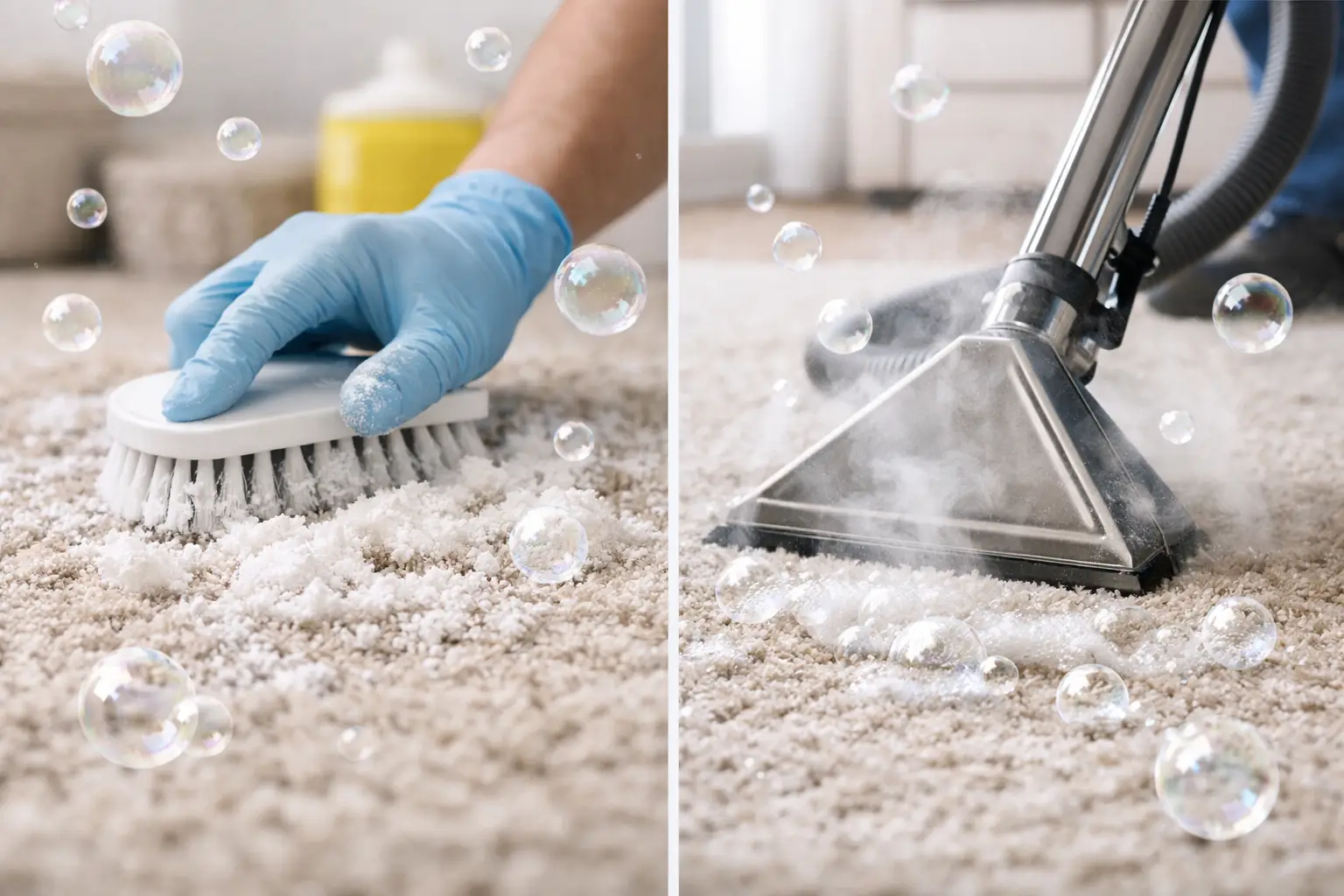
A carpet can look clean at the end of an appointment and still create a problem by bedtime if it is left wet, smells musty, or attracts soil again quickly. That is why dry shampoo versus steam cleaning is more than a technical choice. For busy households with kids, pets, and full schedules, the cleaning method affects how soon you can use the room, how fresh it feels, and how well your carpet holds up over time.
Dry shampoo versus steam cleaning: the basic difference
Steam cleaning, often called hot water extraction, uses hot water and cleaning solution that are worked into the carpet and then extracted with a powerful vacuum. It can be a useful method for certain heavy-soil situations, particularly when a carpet has been neglected for a long time. However, it introduces a significant amount of moisture, even when the equipment removes much of it.
Dry shampoo cleaning uses a low-moisture process instead. A professional cleaning solution is applied to loosen soil and stains, then worked through the carpet fibers and removed along with the dirt. The carpet is barely damp rather than saturated.
The name can be confusing. Dry shampoo carpet cleaning is not simply sprinkling powder over a rug and calling it clean. When performed correctly, it is a professional method designed to reach embedded soil while using far less water than steam cleaning.
Why drying time matters in a Puget Sound home
Drying time is one of the clearest differences between the two methods. A steam-cleaned carpet may need many hours to dry and can sometimes remain damp longer depending on the carpet thickness, ventilation, humidity, and how much water was used. During that time, furniture may need to stay off the carpet, foot traffic can be inconvenient, and pets may have to be kept out of the room.
In the Puget Sound area, damp weather can make that wait even less appealing. Opening windows is not always practical, and indoor airflow may be limited during cooler months. A carpet that stays wet too long can develop a stale odor. In some cases, excess moisture can also create conditions that encourage mildew beneath the surface, especially if the carpet pad or subfloor has existing moisture issues.
A dry-shampoo approach leaves carpets barely damp and typically ready for normal use much sooner. That does not mean every carpet dries at the exact same speed. Fiber type, room temperature, and air circulation still matter. But reducing the amount of water in the first place gives homeowners a practical advantage: less disruption and less concern about a damp carpet lingering overnight.
Which method cleans more deeply?
There is no honest one-word answer. The best method depends on the type of soil, the condition of the carpet, and the result you need.
Steam cleaning can flush out a large amount of loose soil when extraction is strong and the carpet is not over-wet. It may be appropriate after a major spill, a long period without professional care, or an event that has left heavy contamination in the carpet. The trade-off is moisture. If the technician uses too much solution or cannot extract it effectively, the carpet may feel wet, stiff, or slow to dry.
Dry shampoo cleaning can provide deep, visible results without soaking the carpet. The cleaning solution helps break up oils, tracked-in dirt, and common household grime, while agitation lifts soil from the fibers. A quality process also matters because leftover detergent can make a carpet feel sticky and cause it to soil faster. The goal should always be clean fibers with no heavy residue left behind.
For routine residential carpet care, especially in homes where quick drying is a priority, low-moisture cleaning is often the more practical fit. For extreme conditions, a cleaning professional should inspect the carpet and explain what method is appropriate rather than making a one-size-fits-all promise.
Stains need the right treatment, not just more water
More water does not automatically mean better stain removal. Coffee, pet accidents, food spills, tracked-in mud, and oily spots all respond differently. The age of the stain, carpet fiber, backing, and any previous cleaning products can affect the outcome.
A technician should identify the stain first and use the proper treatment before cleaning the full area. Some stains can be greatly improved, while others may be permanent due to dye loss, heat damage, or a previous attempt that set the stain. Straight answers are better than unrealistic guarantees.
Pet odors deserve special attention. Surface cleaning alone may not solve an odor that has reached the carpet backing or pad. Targeted odor treatment is often needed to address the source rather than simply cover it with fragrance.
Safety for children, pets, and everyday living
Homeowners often ask whether carpet cleaning products are safe around their family. That is a reasonable concern, particularly when toddlers play on the floor or pets spend most of the day on the carpet.
The method matters, but the products and technician practices matter too. Look for a service that uses non-toxic, eco-friendly solutions and explains what is being applied in your home. A low-moisture process also helps reduce the inconvenience of keeping children and pets away from a wet room for much of the day.
It is still wise to allow treated areas to dry fully before normal use, follow the technician’s instructions, and keep pets away during the cleaning appointment. Those small steps help protect the results and give everyone time to settle back into the space comfortably.
Carpet type and condition can change the answer
Not all carpeting should be cleaned the same way. Dense synthetic carpet, delicate wool, older carpeting, area rugs, and heavily textured styles can each have different care needs. Steam cleaning may be too aggressive or too wet for some materials, while dry cleaning methods require the right products and technique to avoid leaving residue.
The same principle applies to upholstery, mattresses, and area rugs. A sofa cushion may look durable but have a delicate fabric backing. An oriental rug may bleed color if it is cleaned improperly. A professional should assess the material before starting, explain any risks, and recommend a method based on the item rather than a standard package.
How to choose a carpet cleaning service
The right service should make the decision easier, not more confusing. Ask how wet your carpet will be after cleaning, how long it should take to dry, what products will be used, and whether the estimate includes stain or odor treatment. Clear pricing and clear expectations are signs of a company that respects your home and your time.
Also ask about residue. Some cleaning approaches leave behind soaps or detergents that can attract dirt after the carpet dries. A residue-free result helps carpeting stay cleaner longer and feel better underfoot.
For households in Gig Harbor, Port Orchard, Tacoma, Bremerton, and the Key Peninsula, DryMaster of Puget Sound uses a barely damp dry-shampoo method designed to deliver thorough cleaning without the soaking and lengthy drying time that can come with steam cleaning.
A practical choice starts with your priorities
If your main concern is flushing a severely neglected carpet and you can accommodate a longer drying window, steam cleaning may be worth considering. If you want effective cleaning, faster drying, family-safe products, and less risk from excess moisture, dry shampoo cleaning is often the better everyday option.
The best carpet cleaning leaves your home looking fresher without turning your living room into a no-go zone. Choose a method that treats the soil, respects the material, and lets your family get back to using the space sooner.
Leave a Reply