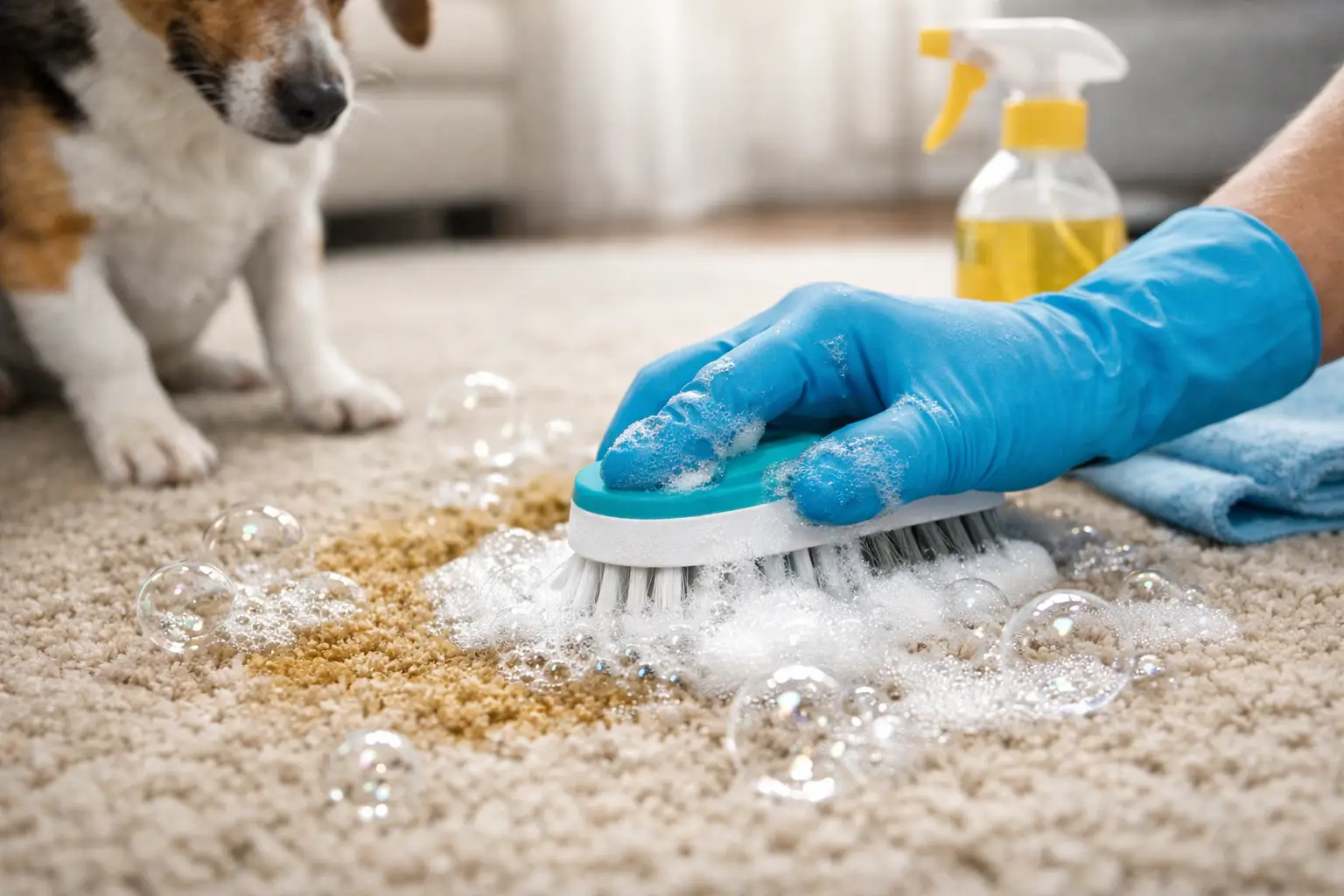
A pet urine carpet cleaning example is often more useful than generic stain advice because the visible spot is only part of the problem. Urine can travel through carpet fibers into the backing and padding, leaving odor behind even after the surface looks clean. The right response depends on how fresh the accident is, how much was deposited, and whether it has happened in the same area before.
For a busy pet household, the goal is simple: remove as much moisture as possible, treat the source of the odor safely, and avoid soaking the carpet. Acting quickly gives you the best chance of preventing a lasting stain and that unmistakable smell that returns on humid days.
A Realistic Pet Urine Carpet Cleaning Example
Imagine a dog has an accident overnight on a light-colored bedroom carpet. By morning, the urine has dried. There may be a faint yellow mark, but the stronger concern is the odor when the room warms up later in the day.
The homeowner sprays a heavily scented cleaner over the spot and scrubs it with a towel. The carpet looks better for a few hours, but the smell returns. A week later, the dog uses the same spot again.
This happens because fragrance does not remove urine deposits. Scrubbing can also push contamination deeper into the carpet or spread it across a larger area. If the urine reached the padding, treating only the surface rarely solves the issue.
A better approach starts by locating the full affected area. The damp or discolored spot may be smaller than the area that actually contains urine residue. In older accidents, a UV light can help identify spots that are not obvious in normal lighting, although it can also reveal other materials and should be used as a guide rather than final proof.
What to Do When the Accident Is Fresh
Fresh urine is easier to manage because less of it has dried into the carpet and backing. Start by placing clean white towels or paper towels over the area and pressing firmly. Stand on the towels if needed, then replace them until they no longer absorb much moisture.
Do not rub back and forth. Blotting lifts liquid upward; rubbing can spread it outward and damage carpet fibers. Avoid adding a large amount of water, especially if the carpet is over padding. Excess water can drive urine farther down and create a slow-drying area that may develop a musty smell.
After blotting, apply a pet-safe urine treatment according to its directions. An enzyme-based product can be helpful for fresh organic residue, but it needs enough contact time to work. More product is not always better. The treatment should reach the same depth as the urine without saturating a wide section of carpet.
Once treated, allow the area to dry with good airflow. Keep pets away until it is dry so they do not track residue or return to the same place. If the odor is gone after drying, the spot may be resolved. If it returns, the urine likely reached deeper layers or there are older deposits nearby.
Why Old Pet Urine Is Harder to Remove
Dried urine can leave behind concentrated salts and odor-causing residue. Moisture in the air may reactivate that odor, which is why a room can smell fine one day and unpleasant the next. A pet’s sensitive nose can detect those traces long before a person does, increasing the chance of repeat accidents.
Older stains also come with uncertainty. You may not know how long they have been there, whether a previous cleaner left residue, or whether the spot has been treated repeatedly. In a home with multiple pets, several overlapping accidents can make one small area a deeper odor problem.
This is where professional evaluation can save time and frustration. The technician can assess whether the issue is limited to the carpet face fibers or whether treatment needs to address the backing and padding. Severe, repeated contamination may require more than surface cleaning. In some cases, the affected padding must be replaced to fully remove the odor source.
The Difference Between Cleaning a Stain and Treating an Odor
A stain is what you see. Odor is what remains in the carpet system. They often occur together, but they need different attention.
A stain treatment focuses on improving the carpet’s appearance without harming color or texture. Odor treatment focuses on neutralizing urine residue where it has settled. Covering the area with deodorizer may make the room smell better temporarily, but it does not remove the source.
This distinction matters when choosing a cleaning method. Overwet steam cleaning can leave carpet and padding damp for too long, particularly if a urine spot has already penetrated beneath the surface. A controlled, barely damp process is often a better fit for routine carpet care because it helps clean fibers while reducing drying time and mildew concerns.
At DryMaster of Puget Sound, the focus is on deep cleaning with dry-shampoo technology that uses minimal moisture and residue-free products. For pet-related odor concerns, the first step is always determining what the carpet actually needs rather than treating every situation like a standard cleaning appointment.
Common Mistakes That Make Pet Urine Worse
Pet accidents are stressful, and homeowners understandably want a quick fix. Still, a few common actions can make the final result harder to achieve:
- Soaking the spot with water, vinegar, or multiple cleaners can spread contamination into the padding.
- Using a steam cleaner before addressing urine residue can set some stains and leave too much moisture behind.
- Scrubbing aggressively can fray carpet fibers and enlarge the visible stain.
- Using strongly fragranced products can mask the odor without removing it.
- Skipping treatment because the stain disappeared can allow odor to return later.
Bleach and ammonia-based cleaners should not be used on carpet for pet urine. Bleach can discolor fibers and damage backing. Ammonia has an odor profile that can be confusing to pets and may encourage repeat marking in some situations.
When Professional Help Makes Sense
A single fresh accident that is blotted and treated quickly may be manageable at home. It becomes more sensible to call a professional when odors return after cleaning, stains keep appearing, several spots are involved, or a pet repeatedly uses one area.
Professional service is also a good choice before listing a home, after moving into a property with prior pet owners, or when a child spends time playing on the carpet. These situations call for more confidence than a surface-level deodorizer can provide.
Be clear about the history of the problem when scheduling service. Let the cleaner know whether the stain is fresh or old, how many areas are affected, what products have already been used, and whether the pet has had repeated accidents in the same place. That information helps set realistic expectations and allows for the right treatment plan.
Preventing Repeat Accidents After Cleaning
Cleaning works best alongside a plan to prevent new accidents. Return pets to the cleaned area only after it is fully dry. Block access for a short time if the spot has become a habit, and clean any nearby areas that may carry scent traces.
If repeat accidents are unusual, consider whether there has been a change in routine, stress, diet, mobility, or bathroom access. Sudden changes in a pet’s behavior can warrant a conversation with a veterinarian. For ongoing marking, consistent training and management are just as important as cleaning.
The most helpful next step is to treat pet urine early, use minimal moisture, and address lingering odor before it becomes part of the room. A clean-looking carpet should also smell clean, dry quickly, and feel safe for every member of the household – paws included.
Leave a Reply