
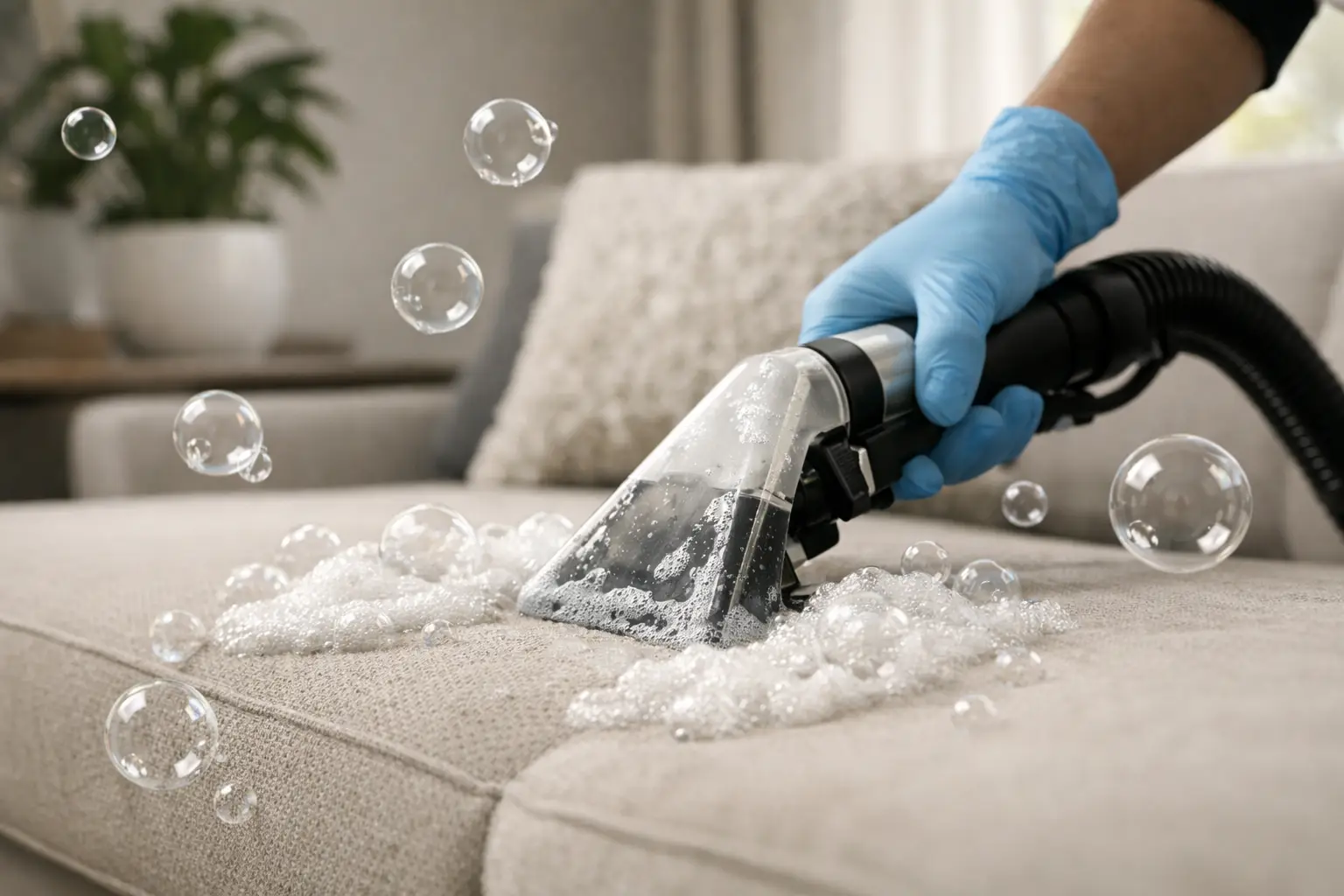
Your favorite chair can look clean while holding weeks of dust, pet dander, pollen, and skin flakes beneath the surface. For families dealing with sneezing, itchy eyes, congestion, or lingering indoor odors, upholstery cleaning for allergy relief can make a noticeable difference where daily life happens most: on the sofa, recliner, dining chairs, and fabric headboards.
Vacuuming helps, but it cannot always reach the particles that settle deep into cushions and fabric fibers. Professional cleaning is designed to lift the buildup that regular surface care leaves behind, without turning your furniture into a damp, out-of-service drying project.
Why Upholstery Can Trigger Allergy Symptoms
Upholstered furniture is comfortable because its fibers, padding, and cushions hold air. Unfortunately, those same layers can collect airborne particles. Every time someone sits down, adjusts a cushion, or lets the dog claim a spot on the couch, some of that material can be disturbed and returned to the air.
Common irritants found in upholstery include dust mites and their waste, pet dander, pollen tracked indoors on clothing, mold spores, and fine outdoor particles. Food crumbs, body oils, and pet hair can also create conditions that make furniture feel less fresh over time.
This does not mean your sofa is the sole cause of allergy symptoms. Seasonal allergies, ventilation, carpets, bedding, and outdoor exposure all play a role. Still, upholstered furniture is an often-overlooked reservoir, especially in rooms where your family spends several hours each day.
How Upholstery Cleaning for Allergy Relief Helps
The goal of professional upholstery cleaning is not to sterilize your home or promise that allergies will disappear. Allergy symptoms have many causes, and no cleaning method can remove every allergen from every surface. What thorough cleaning can do is reduce the buildup of common irritants in fabric furnishings.
A proper service begins by identifying the fabric and its condition. Cotton, microfiber, synthetic blends, delicate natural fibers, and older upholstery can respond differently to moisture and cleaning solutions. Using the wrong method may leave water marks, shrinkage, lingering residue, or excessive dampness.
DryMaster’s dry-shampoo approach uses very little moisture while working into the fabric to lift embedded soil and particles. This is especially useful for homeowners who do not want wet cushions sitting around for a day or more. Barely damp cleaning supports faster drying and helps avoid the mildew concerns that can come with over-soaked upholstery.
The result is furniture that looks cleaner, smells fresher, and has less trapped debris in the areas your family touches every day.
Fast Drying Matters More Than Convenience
Fast drying is convenient, but it is also practical for maintaining a fresh indoor environment. When upholstery stays wet too long, especially in thick cushions or humid conditions, moisture can create musty odors and increase the risk of mildew growth.
Steam cleaning can be appropriate for certain fabrics and situations, but more water is not automatically better. It depends on the upholstery type, how heavily soiled it is, and how well the piece can dry afterward. A low-moisture method is often the better fit for everyday family furniture, delicate fabrics, and homes that need their living room back quickly.
Signs Your Furniture May Need Professional Cleaning
You do not need to wait for a visible stain to schedule upholstery cleaning. Dust and dander build gradually, and many fabric surfaces hide soil well until they are already overdue for care.
Consider professional cleaning if your household notices more allergy symptoms indoors, your furniture has a dull or grayish appearance, cushions carry a stale smell, or pet hair seems impossible to fully remove. It is also a smart service after a high-pollen season, before welcoming guests, after a pet accident, or when moving into a previously lived-in home.
Fabric furniture near doors, windows, or frequently used seating areas may need attention more often. A light-colored sofa with children and pets usually needs a different schedule than a formal chair in a low-traffic room.
What You Can Do Between Cleanings
Professional service works best alongside simple, consistent household care. Start by vacuuming upholstery regularly with an attachment designed for fabric. Move slowly over seat cushions, under cushions, arms, seams, and crevices where pet hair and dust collect.
Wash removable throws and pillow covers according to their care labels, and use washable blankets on the pet’s preferred furniture spot when possible. Keeping windows closed during high-pollen days can also limit what settles on indoor fabrics.
For small spills, blot right away with a clean cloth rather than rubbing. Rubbing can push the spill deeper into the fibers and spread the stain. Avoid saturating cushions with store-bought spot removers, particularly when you are unsure of the fabric type. Too much product or water can leave a sticky residue that attracts more soil later.
If someone in the household has significant allergies, consider cleaning connected soft surfaces at the same time. Rugs, carpets, mattresses, curtains, and drapes can all hold similar particles. Cleaning only the sofa may help, but a broader approach can produce a more noticeable improvement in how the home feels.
How Often Should Upholstery Be Cleaned?
For many homes, professional upholstery cleaning every 12 to 18 months is a reasonable starting point. Homes with pets, young children, smokers, frequent guests, or household members with allergy concerns may benefit from service every 6 to 12 months.
There is no single schedule that fits every home. If your couch is used lightly and vacuumed regularly, annual or less frequent cleaning may be enough. If it is the center of family movie nights, pet naps, snacks, and daily use, buildup happens faster.
The condition of the furniture matters as much as the calendar. A professional can assess whether a deep cleaning is appropriate and recommend a method that protects the fabric rather than treating every piece the same way.
Choose a Method That Protects Your Home
When comparing upholstery cleaning services, ask what cleaning method will be used, how much moisture is involved, what drying time to expect, and whether the products are safe for children and pets. Clear answers are a good sign that the provider understands both fabric care and the concerns behind allergy-focused cleaning.
Look for a service that avoids leaving heavy chemical residue behind. A fresh scent is not the same as a truly clean surface, and strong fragrances can be unpleasant for sensitive households. Eco-friendly, non-toxic cleaning solutions can help reduce soil and odors without adding unnecessary harshness to the rooms where your family relaxes.
For homeowners in Gig Harbor, Tacoma, Port Orchard, Bremerton, and the Key Peninsula, DryMaster of Puget Sound provides low-moisture upholstery cleaning designed for effective results without soaking your furniture. The goal is straightforward: cleaner fabric, fast drying, and a home that feels more comfortable to live in.
Your sofa does not need to look visibly dirty before it deserves attention. If your furniture feels stale, holds pet hair, or seems to aggravate indoor allergy discomfort, a professional cleaning can be a practical next step toward a fresher place to sit, rest, and breathe.
Leave a Reply