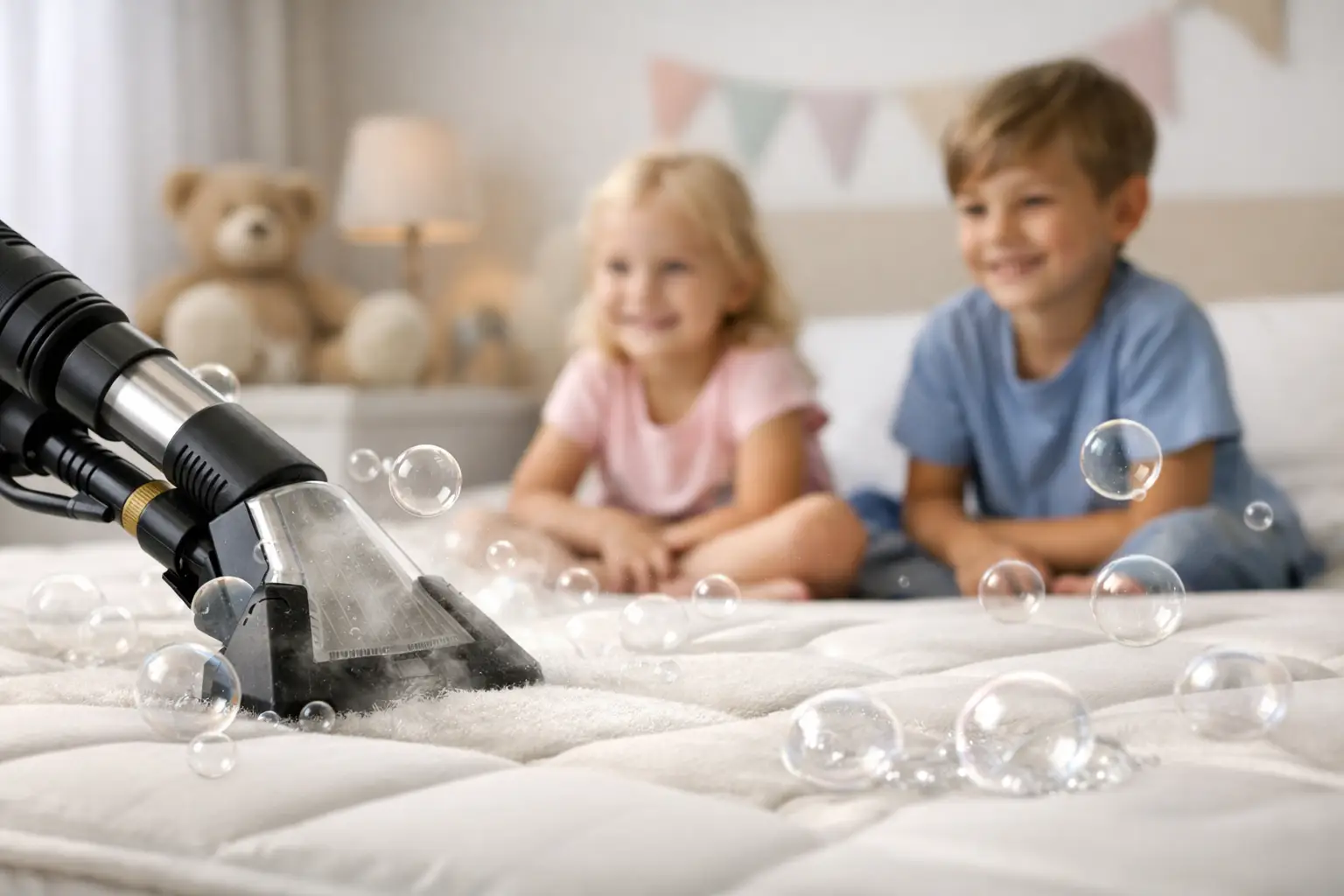
A child can spend 10 to 12 hours a day in bed between nighttime sleep, naps, and quiet time. That makes the question, is mattress cleaning safe for kids, a practical one. The short answer is yes, when the cleaning method uses child-safe products, controlled moisture, and enough drying time before the bed is used again.
A mattress can hold more than visible stains. Dust, shed skin cells, pet dander, body oils, and everyday odors settle into its fabric over time. Professional cleaning can help remove that buildup, but safety depends on how the job is done. The right service should clean deeply without saturating the mattress or leaving behind strong chemical odors or residue.
Is Mattress Cleaning Safe for Kids When Done Professionally?
Professional mattress cleaning is generally safe for children when the cleaner uses non-toxic products designed for interior fabrics and follows the product directions carefully. Low-moisture cleaning is especially useful for mattresses because it avoids soaking the thick padding and layers underneath the surface.
Too much water is the main concern with poorly performed mattress cleaning. A mattress that stays damp can develop a musty smell and create conditions that support mildew growth. It can also remain uncomfortable or unsafe to sleep on until it is fully dry. Steam cleaning can be effective in certain situations, but it uses more moisture and may require a longer drying window. It is not always the best fit for a child’s bed.
A barely damp, dry-shampoo approach removes soil and odors while keeping moisture under control. At DryMaster of Puget Sound, this method is designed to provide deep cleaning with residue-free drying, helping families avoid the long wait and mildew concerns that can come with over-wet cleaning.
What Makes a Mattress Cleaning Method Child-Safe?
The word safe should mean more than a pleasant scent or a quick promise. For children’s mattresses, a responsible cleaning process accounts for the solution, the moisture level, the drying process, and the condition of the mattress itself.
Non-Toxic, Low-Residue Products
Children have close contact with bedding and mattresses. They may sleep face-down, sweat during the night, or spend time playing and reading on the bed. Cleaning products should be appropriate for fabric surfaces and should not leave a sticky film that can attract more dirt.
Ask what type of solution will be used and whether it is intended to be family- and pet-safe. Be cautious with cleaners that rely on heavy fragrance to cover odors. A strong perfume does not prove that a mattress is clean, and it may be unpleasant for a child with asthma, allergies, or scent sensitivity.
Minimal Moisture
Mattresses are much harder to dry than a thin blanket or removable cushion. Their foam, batting, and inner layers can trap moisture where you cannot see it. A method that uses only the amount of moisture needed for cleaning is the safer choice for most household mattresses.
Low-moisture cleaning also makes scheduling easier. Families do not want to turn bedtime into a last-minute scramble because a child’s bed is still damp. Before booking, ask how long the mattress should be left unused and plan the appointment early enough to allow for full drying.
Complete Drying Before Bedtime
Even family-safe cleaning products should be allowed to dry completely. Keep sheets, mattress protectors, stuffed animals, and blankets off the bed until the surface is dry to the touch. Opening a window, using normal indoor airflow, or running a fan can help if needed.
Do not judge dryness only by the top fabric. Press gently on different areas of the mattress, including spots that received odor or stain treatment. If anything feels cool, damp, or has a lingering chemical smell, give it more time before making the bed.
When Mattress Cleaning Can Be Especially Helpful
A professional cleaning is not a substitute for a waterproof mattress protector, regular sheet washing, or medical treatment for allergies. It can, however, be a useful part of keeping a child’s sleeping space fresher and more comfortable.
Cleaning may be worth considering after a stomach bug, potty-training accident, spilled drink, pet accident, or an odor that returns even after changing sheets. It can also help when a mattress has not been cleaned for years and has a noticeable buildup of body odor or dust.
For allergy-prone children, the goal is not to make a mattress sterile. That is not realistic in a lived-in home. The goal is to reduce the soil, dander, and dust that accumulate in the fabric while using a method that does not add unwanted moisture or irritating residue.
Situations That Need Extra Care
Not every mattress should be treated the same way. Memory foam, pillow-top mattresses, natural-fiber covers, adjustable beds, and mattresses with existing water damage may require special handling. The manufacturer’s care label is a good starting point, especially if the mattress is still under warranty.
If a child has diagnosed asthma, severe environmental allergies, eczema, or chemical sensitivities, let the cleaning professional know before the appointment. A reputable cleaner can explain the products used, discuss ventilation, and help you determine an appropriate dry time. When symptoms are severe or health concerns are specific, it is wise to follow guidance from your child’s health care provider as well.
Mold is another situation where simple surface cleaning may not be enough. If a mattress has been soaked from flooding, a roof leak, or a long-term moisture problem, there may be contamination below the surface. In that case, replacement may be safer than attempting to clean and keep the mattress.
How Parents Can Prepare for Mattress Cleaning
A little preparation helps the service go smoothly and gives the mattress the best chance to dry quickly. Strip the bed completely, including the mattress pad and protector. Wash bedding separately using the care instructions, since clean sheets on an unwashed mattress do not solve the whole problem.
Point out any stains, odors, or accident areas before cleaning begins. Details matter. A urine odor, for example, needs a different approach than a food spill or normal body-oil buildup. Mention the age of the stain and whether you have already tried a home cleaner, since some products can set stains or leave residue behind.
It also helps to clear a path around the bed and keep children and pets out of the room during the appointment. Once the work is complete, wait for the recommended dry time, then remake the bed with clean linens and a quality mattress protector.
Avoid These Common Mistakes
The safest option is not always the strongest-smelling cleaner or the wettest method. Avoid soaking a mattress with rental equipment, overusing store-bought spot sprays, or applying bleach, ammonia, or disinfectants that are not approved for mattress fabrics. These can damage the material, create fumes, and make odors worse if they are not fully removed.
Do not cover a freshly cleaned mattress with a waterproof protector too soon. A protector is useful after the mattress is dry, but putting it on while moisture remains can trap that moisture against the fabric. Give the mattress time to air out first.
Finally, do not wait until an odor is overwhelming. Addressing spills and accidents promptly is easier than trying to remove a stain that has worked its way deeper into the padding for months.
A child’s bed should feel clean, dry, and ready for rest – not heavily scented or damp. Choosing a low-moisture, non-toxic cleaning method and allowing proper drying time can make mattress cleaning a sensible part of a healthier home routine.
Leave a Reply