
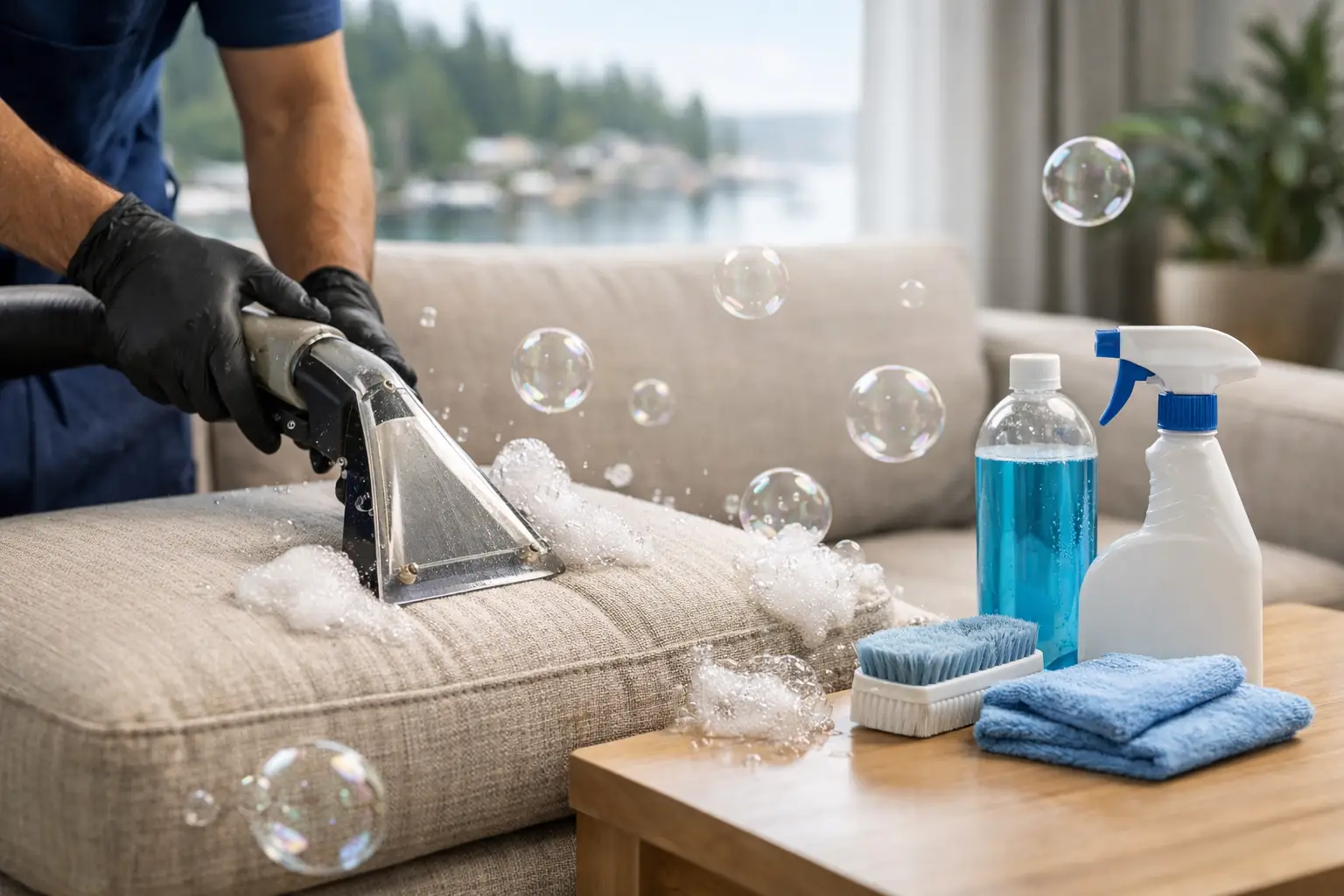
A sofa can look clean from across the room and still hold the evidence of daily life: pet oils along the arms, snack crumbs in the cushions, dust in the weave, and that faint odor that returns whenever the house is closed up. When searching for the best upholstery cleaners Port Orchard homeowners can rely on, the goal is not simply to make fabric look better for an afternoon. It is to remove embedded soil and odors safely, without soaking the furniture or leaving behind a sticky residue.
Upholstery is not carpet. Its fibers, dyes, padding, and construction vary from one piece to the next, so the right cleaning method matters. A dependable local cleaner should inspect the fabric, explain what can realistically be improved, and use a process that fits the material instead of treating every couch the same.
What the Best Upholstery Cleaners in Port Orchard Do Differently
The best service providers start with the condition of the furniture, not a one-size-fits-all promise. A heavily used family sectional may need more attention on body oils, food spills, and pet hair. A formal chair may have delicate natural fibers that require a gentler approach. An older piece with set-in discoloration may improve significantly, but not return to showroom-new condition.
That honest assessment is a good sign. Professional cleaning can remove a surprising amount of soil from upholstery, brighten tired-looking fabric, and improve indoor freshness. But some stains permanently alter dye or fibers, especially if they have been heat-set, treated with the wrong household product, or left in place for a long time. A trustworthy cleaner explains the difference before work begins.
Drying time should also be part of the conversation. Traditional wet extraction can be effective for certain fabrics and situations, but over-wetting is a real concern. Moisture can travel into cushion filling, take longer to dry in humid weather, and create a stale smell if the furniture stays damp too long. Barely damp cleaning methods reduce that risk while still lifting dirt from the surface and fibers.
The Questions Worth Asking Before You Schedule
Price matters, but the lowest advertised number does not always reflect the final service. Before booking, ask whether the estimate covers the number of pieces, cushions, stain treatment, deodorizing, and any minimum service charge. Clear answers help avoid surprises when the technician arrives.
You should also ask what products will be used around children and pets. Furniture is one of the most frequently touched surfaces in a home. Harsh chemicals, heavy fragrances, and residue can be a concern for families, especially when a child naps on the couch or a pet spends most of the day on a favorite chair. Look for non-toxic, eco-friendly solutions designed for household use.
Another useful question is whether the company tests fabrics first. Upholstery cleaning codes are often found under cushions, but labels can be missing or unclear. A professional should be prepared to identify the fabric type, test a small area when appropriate, and adjust the process to protect color and texture.
Why Faster Drying Is More Than a Convenience
Nobody wants to plan around a wet sofa. Fast drying means you can get back to normal use sooner, but it also supports better fabric care. When upholstery is saturated, the moisture can reach foam, padding, and backing materials that do not dry as quickly as the outer fabric.
A low-moisture, dry-shampoo approach is especially helpful for many residential pieces because it cleans without flooding the upholstery. The fabric is left barely damp rather than soaked, helping prevent mildew concerns and reducing the chance of lingering damp odors. It is a practical option for busy households that need visible results without turning the living room into an off-limits zone for a day.
That does not mean every stain has the same solution. Some spills need targeted treatment before cleaning, and delicate fabrics may call for a specialized method. The key is having a technician who can match the cleaning approach to the furniture rather than relying on excessive water and hoping for the best.
Common Upholstery Problems a Professional Can Address
Most homeowners wait until a stain becomes obvious, but upholstery gradually collects more than visible spots. Dust, skin oils, allergens, pet dander, crumbs, and airborne particles work their way into the fabric over time. The result may be a dull color, rougher feel, or room that does not smell as fresh as it should.
Professional upholstery cleaning is often a smart choice after a pet accident, a drink spill, a move, a seasonal deep clean, or before hosting guests. It can also make sense after illness, when refreshing soft surfaces is part of getting the home feeling clean again. In homes with pets and kids, regular maintenance often prevents soil from becoming permanently embedded.
Odor treatment deserves special attention. Covering odors with fragrance is not the same as addressing the source. Pet accidents, food spills, smoke residue, and moisture can settle below the visible surface. Effective service focuses on cleaning the affected area and using an appropriate deodorizing treatment, while setting realistic expectations if the odor has reached deep cushion materials.
How to Prepare Your Furniture for Cleaning
Preparation is simple and helps the appointment go smoothly. Remove throws, pillows, and personal items from the furniture. If possible, clear a path from the entry to the room being cleaned so equipment and technicians can work safely. Point out stains, odors, or problem areas before cleaning begins, and share what caused them if you know. That information can help determine the best treatment.
Avoid applying store-bought spot removers right before service. Some products leave residue, bleach color, or make professional treatment more difficult. For a fresh spill, blot gently with a clean white towel rather than rubbing it into the fibers. Keep pets and children away from the work area until the cleaning is complete and the fabric has dried.
Afterward, follow the technician’s care guidance. Light use may be fine once the upholstery is dry, but avoid placing blankets or plastic coverings over damp fabric. Good airflow can help speed the final drying stage.
A Local Choice for Cleaner, Fresher Furniture
Port Orchard homes deal with real life: rainy-day paw prints, ferry commutes, family movie nights, and furniture that works hard every day. The right upholstery cleaner should make maintaining that furniture easier, with clear pricing, safe products, careful fabric handling, and drying times that fit your schedule.
DryMaster of Puget Sound uses a barely damp, residue-free dry-shampoo process designed to clean deeply without over-soaking upholstery. For homeowners who want family- and pet-safe care without the inconvenience of wet cushions, that difference matters.
Your furniture does not need to be replaced just because it looks tired or carries the scent of everyday use. A careful professional cleaning can bring back a cleaner appearance, a fresher room, and the comfort of sitting down on fabric that truly feels cared for.
Leave a Reply