
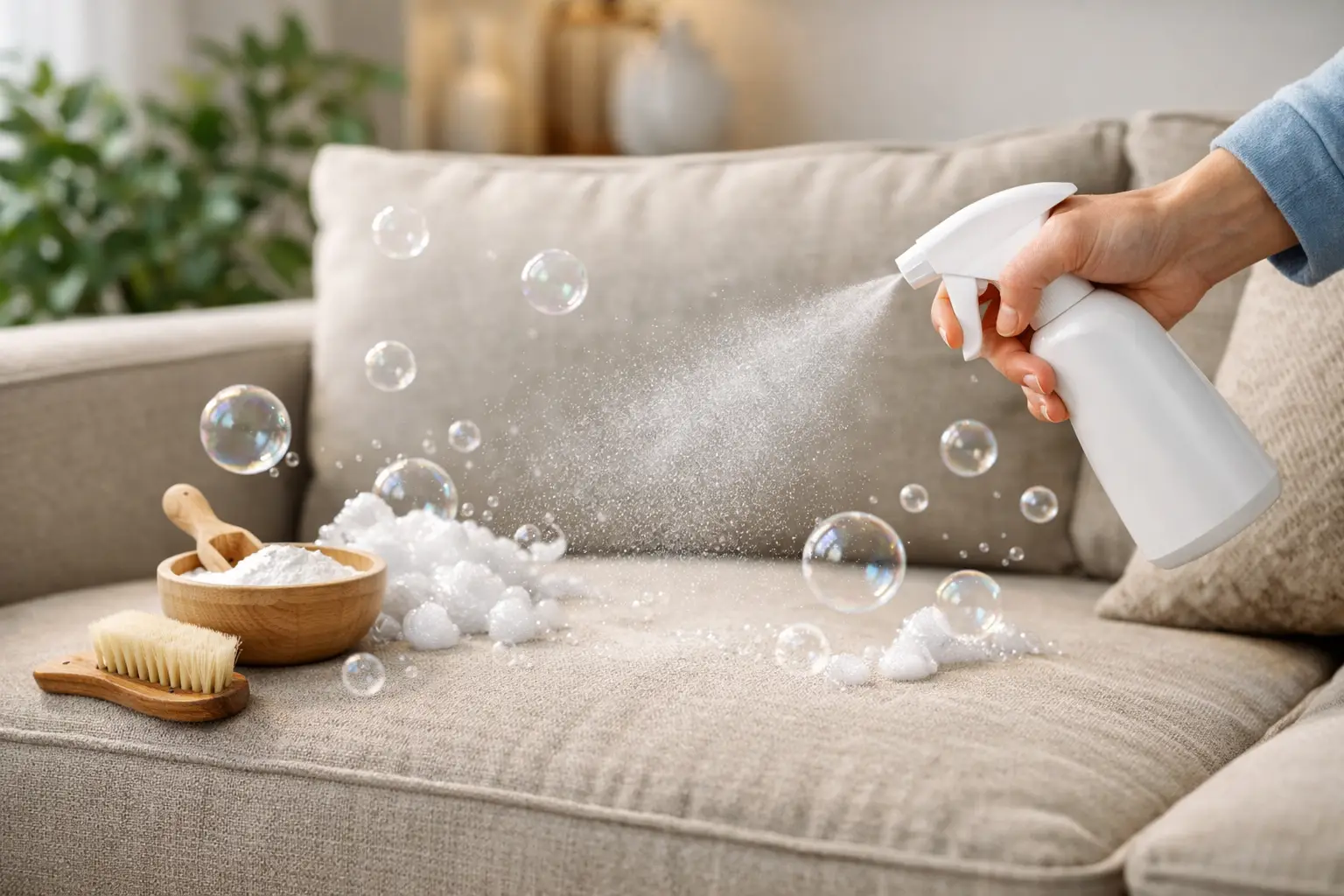
A sofa can look clean and still hold onto yesterday’s dinner, wet-dog smell, smoke, or the faint mustiness that appears after a damp Puget Sound winter. Knowing how to deodorize upholstery starts with one simple rule: treat the source of the odor without soaking the fabric. Too much moisture can push odor deeper into the padding, lengthen drying time, and create the mildew problem you were trying to solve.
The right approach depends on what caused the smell and how far it has traveled into the furniture. Surface odors may respond well to careful at-home treatment. Old spills, pet accidents, smoke, and persistent musty odors often need deeper cleaning to reach the fabric backing and cushion fill.
Find the Odor Source Before You Treat It
Deodorizers can temporarily cover an odor, but they cannot remove food residue, pet urine, body oils, or moisture trapped below the surface. Before applying anything, inspect the upholstery closely. Check seat cushions, armrests, creases, the area beneath removable cushions, and the back of the furniture. If the smell is strongest in one location, that is usually where the treatment should begin.
Think about when the odor started. A sour smell after a drink spill may mean moisture or residue remains in the cushion. A sharp ammonia-like smell often points to pet urine. Smoke odors can settle across the entire piece, especially on fabric with a textured weave. A musty smell may signal that the furniture was cleaned too wet, stored in a damp space, or exposed to high humidity.
If you can remove cushion covers, check the care tag before washing them. Some covers are washable, while others can shrink, lose color, or become misshapen. Many upholstered pieces have cleaning codes on their tags: W means water-based products are generally acceptable, S calls for solvent-based cleaning, WS allows either, and X means vacuuming or professional cleaning only. When in doubt, use the least aggressive option and test it first.
How to Deodorize Upholstery at Home
Start by vacuuming the entire piece slowly and thoroughly, including seams and under cushions. Dust, pet hair, crumbs, and dry soil can hold odor and prevent a deodorizing product from reaching the fabric evenly. Use an upholstery attachment so you do not pull threads or rough up delicate material.
For mild, dry odors, baking soda can help absorb smells from fabric surfaces. Sprinkle a light, even layer over the upholstery and let it sit for several hours, preferably while pets and children cannot access the furniture. Then vacuum every bit of powder carefully. Do not work baking soda into the fabric with water or a brush. It can become difficult to remove from dense upholstery and may leave a gritty residue in seams.
For a recent spill, blot first with a clean white towel. Press firmly to lift moisture, but do not rub. Rubbing spreads the spill and can drive it farther into the fabric. Once the area is mostly dry, use an upholstery-safe cleaner according to its directions. Apply the product to a towel rather than saturating the furniture whenever possible.
Pet odors need a more targeted solution. An enzyme-based upholstery product can break down the organic material that causes urine odors, but it must be compatible with your furniture’s fabric and used with restraint. Follow the label, test an inconspicuous area, and avoid overapplying. If the accident reached the cushion padding or has happened more than once, a surface treatment may not be enough.
Use Moisture Sparingly
Many online cleaning tips recommend spraying vinegar or homemade mixtures across an entire couch. That can create more problems than it solves. Vinegar may leave its own odor while wet, and excessive liquid can cause water rings, color changes, or damp padding. Dish soap, laundry detergent, and heavily scented sprays can also leave residue that attracts soil later.
A better method is to use small amounts of a fabric-safe product, blot away excess moisture, and provide good airflow. Open windows when weather permits, run a fan nearby, and keep cushions separated until fully dry. Avoid sitting on the furniture while it is damp. Pressure can move remaining moisture and odor deeper into the cushion.
When Baking Soda Is Not Enough
Baking soda is useful for a light refresh, but it does not remove oily buildup, old food spills, smoke particles, or contamination below the fabric. If the odor returns shortly after treatment, the source is likely still present in the upholstery or cushion fill.
This is especially common with pet accidents. Urine can soak through the surface fabric and into foam, where it dries and becomes noticeable again as humidity rises. The same can happen with milk, sweat, damp towels, and spilled beverages. A room may smell fine until the sofa warms up, then the odor returns because the residue was never fully removed.
Smoke odors are another case where masking sprays rarely provide a lasting answer. Smoke leaves fine particles and oily residue on fabric. Effective removal usually requires a cleaning process that lifts embedded soil while using the proper odor treatment for the material.
Avoid These Common Upholstery Deodorizing Mistakes
The quickest way to make upholstery odors worse is to apply too much product. Saturating a cushion may seem like a stronger clean, but thick foam dries slowly. If moisture remains trapped, mildew odors can develop and the cushion may take days to dry completely.
Avoid using bleach, all-purpose cleaners, carpet shampoo, or essential oils on upholstery unless the furniture manufacturer specifically approves them. These products can discolor fabric, weaken fibers, leave residue, or create a strong scent without solving the underlying problem. Essential oils also may not be safe around pets, particularly when applied heavily to furniture they use every day.
Steam cleaning is not the best choice for every upholstered item, either. It can be effective in certain situations, but heat and moisture may damage delicate fabrics, loosen adhesives, cause shrinkage, or leave cushions overly wet. Furniture with natural fibers, silk, velvet, or unknown cleaning codes deserves extra caution.
When to Call an Upholstery Cleaning Professional
Professional cleaning is a practical choice when odors are persistent, the furniture has valuable or delicate fabric, or the smell has reached the padding. It is also the safer route after repeated pet accidents, extensive food spills, smoke exposure, or suspected mildew. A trained technician can identify the fabric, choose an appropriate cleaning method, and address the odor source without relying on heavy fragrance.
For households in Gig Harbor, Tacoma, Port Orchard, Bremerton, and the Key Peninsula, DryMaster of Puget Sound uses a barely damp dry-shampoo process designed to clean upholstery deeply without leaving it soaked. The approach helps reduce drying time and mildew concerns while using eco-friendly, family- and pet-safe solutions.
Professional help can also make sense before hosting guests, moving into a new home, or keeping a favorite sofa in service rather than replacing it. The goal is not for furniture to smell perfumed. It should smell clean, dry, and neutral.
Keep Upholstery Fresh Between Cleanings
Once the odor is gone, small habits make a real difference. Vacuum upholstery regularly, especially in homes with pets. Address spills as soon as they happen, and avoid placing damp blankets, jackets, or towels on couches and chairs. If cushions are removable, rotate them periodically so oils and daily use do not build up in one spot.
Good indoor airflow matters, too. During damp weather, use ventilation or a dehumidifier if rooms tend to feel humid. Upholstery absorbs moisture from the air, and fabric that stays damp can pick up a stale smell even without a visible spill.
A fresh-smelling sofa should feel comfortable to use, not like something you need to cover up with candles or spray. When careful blotting and light deodorizing no longer work, deeper residue is usually the reason. Treating that source with the right method can bring the room back to clean, comfortable living.
Leave a Reply