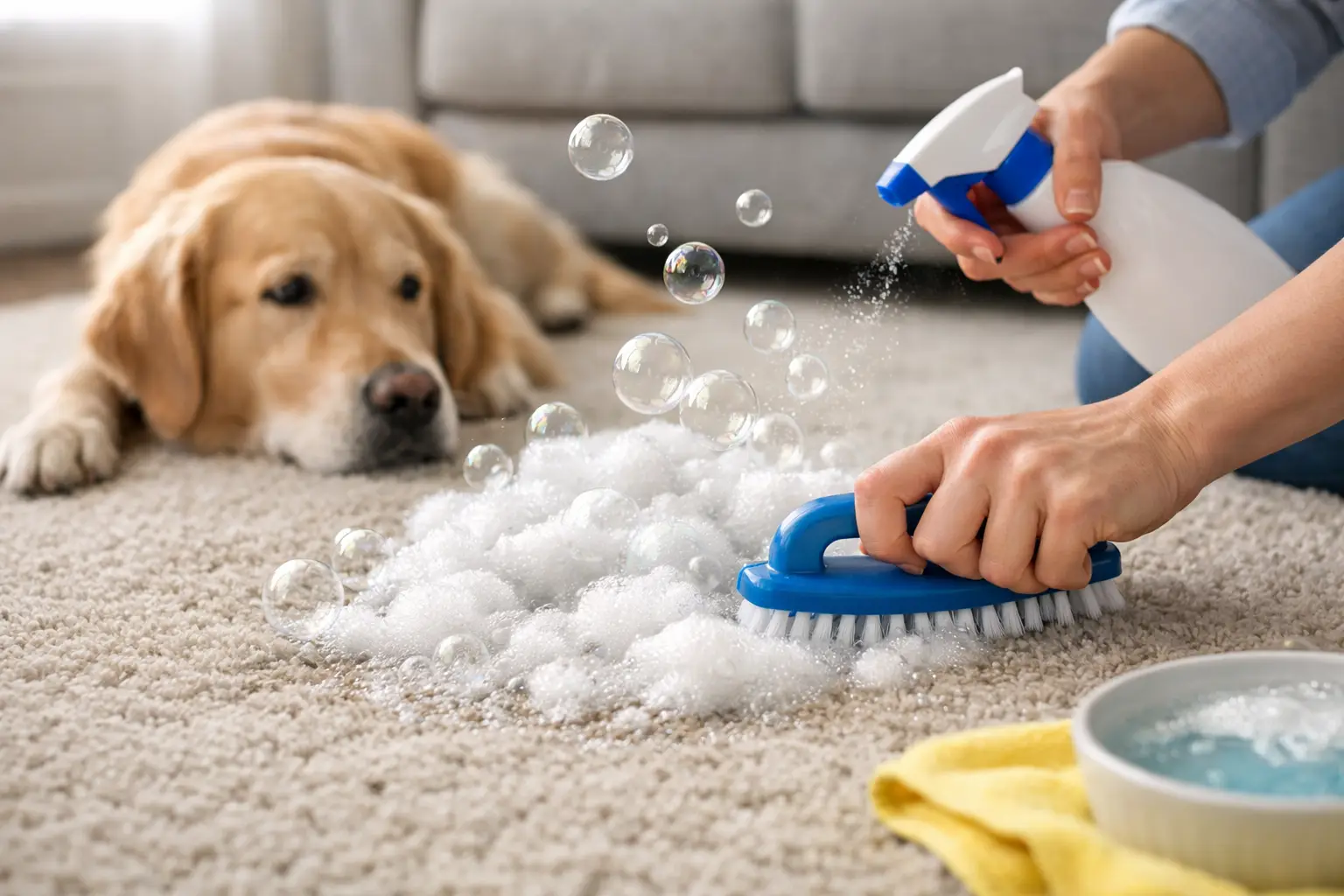
A pet can have an accident in one small corner of a room, yet pet odors can make the entire house feel less clean. That is because the odor is rarely limited to the surface you can see. Urine, dander, saliva, oils, and moisture can settle into carpet fibers, rug backing, upholstery padding, and even the subfloor below.
Air fresheners may cover the smell for an afternoon, but they do not remove the source. The most dependable solution starts with identifying where the odor is coming from, treating it appropriately, and avoiding cleaning methods that leave soft surfaces overly wet.
Why Pet Odors Keep Coming Back
Pet odor is often most noticeable after the home has been closed up for several hours or when humidity rises. Moisture can reactivate odor-causing residue that was left behind after an accident, making a carpet smell fresh one day and unpleasant the next.
Urine is especially challenging. As it dries, it can leave behind crystals and organic residue that bind to fibers and padding. A light surface cleaning might improve the appearance of the spot without reaching the material that is causing the odor. If a pet returns to the same area, the problem can build layer by layer.
Not every odor comes from an accident, either. Pets naturally bring in outdoor soil, shed dander, and leave body oils on favorite sleeping areas. Upholstered furniture, area rugs, pet beds, mattresses, and vehicle seats can all hold onto these everyday odors. Older pets, multi-pet homes, and homes with high-pile carpet may need more frequent attention because odor has more places to settle.
Find the Source Before You Treat It
A visible stain is helpful, but it is not the only clue. Start by noticing where the odor is strongest. Get close to carpet edges, furniture legs, pet beds, and the areas where your pet usually rests. Look for discoloration, stiff fibers, or a spot that feels different from the surrounding carpet.
For older or hidden accidents, a UV light can help reveal urine residue in a dark room. It is a useful tool, but it is not perfect. Some cleaners, natural fibers, and other household materials can also glow. Use it as a guide, then rely on odor and the affected area to decide what needs treatment.
If the smell seems to come from more than one place, do not assume one spot treatment will solve it. In many homes, the obvious accident is only part of the issue. A full carpet, rug, or upholstery cleaning may be the better choice when the odor is widespread rather than concentrated.
What to Do Right After an Accident
Fast action makes a real difference. Blot fresh urine with clean white towels or paper towels, pressing firmly to absorb as much moisture as possible. Avoid rubbing. Rubbing can spread the accident into a larger area and push it deeper into the carpet.
Once you have blotted the area, use a pet-safe enzymatic cleaner according to its label directions. These products are designed to break down organic matter rather than simply perfume the spot. They need enough contact time to work, so spraying and immediately wiping them away is often less effective.
Use enough solution to reach the depth of the accident, but do not soak the carpet. Too much water can spread the residue, saturate the padding, and create a longer drying problem. This is particularly important on carpet over wood flooring, near seams, or in rooms with limited airflow.
After treatment, allow the area to dry fully. Keep pets away from it until it is dry, both to prevent re-soiling and to give the cleaner time to work. If the odor remains after drying, repeat treatment once rather than layering multiple products over the same spot.
Common Pet Odor Fixes That Can Make Things Worse
Home remedies can be tempting, especially when an odor appears suddenly. Some may provide a short-term improvement, but others can leave residue or complicate professional treatment later.
Baking soda can help absorb mild surface odor when it is used sparingly and vacuumed thoroughly. It is not a reliable answer for urine that has reached carpet backing or padding. Excess powder can also settle deep into carpet and be difficult to remove.
Vinegar is another common recommendation, but it is not right for every material or every odor. Its acidity may help with some fresh odors, yet it can have limited effect on dried urine residue. It should not be mixed with other cleaning chemicals, and it is best avoided on delicate rugs or upholstery unless the fabric has been tested.
Steam cleaning can be useful for general soil removal in certain situations, but high heat and excessive moisture are not always the best fit for pet urine. Heat may set some stains, while oversaturation can drive moisture deeper into carpet layers. A carpet that stays wet too long can also develop a musty smell, which creates a second odor problem.
Strong fragrances are not a substitute for odor removal. If the room smells heavily perfumed but the pet odor returns when the fragrance fades, the source is still there.
When Professional Pet Odor Treatment Makes Sense
Professional help is worth considering when an odor returns after home treatment, when the accident is old or unknown, or when there are multiple affected areas. It is also a practical choice for urine in upholstery, mattresses, oriental rugs, or vehicle interiors, where the wrong cleaning method can leave water marks, shrinkage, or lingering moisture.
A qualified cleaning technician can assess the material, locate affected areas, and determine whether the odor is sitting in the fibers, backing, padding, or below. The right treatment depends on that answer. Surface odor calls for a different approach than contamination that has traveled through the carpet to the pad.
There are limits to any cleaning service, and honest assessment matters. If repeated accidents have heavily saturated a carpet pad or reached the subfloor, treatment alone may not fully resolve the problem. In those cases, replacing the pad or sealing the subfloor may be necessary. Knowing this early prevents wasted time and unrealistic expectations.
For homeowners who want fresh carpets without the long wait associated with soaking wet methods, a barely damp cleaning process can be a major advantage. DryMaster of Puget Sound uses dry-shampoo technology designed to clean deeply while helping carpets dry quickly, reducing the moisture that can contribute to mildew and musty odors.
Keep Odors From Settling In Again
The best long-term plan is simple: treat accidents promptly, clean pet bedding often, and schedule routine care for the soft surfaces your pet uses most. Vacuuming regularly removes hair, dander, and tracked-in soil before they get worked deeper into carpet and upholstery.
Pay attention to behavior changes, too. A house-trained pet that suddenly begins having accidents may be signaling stress, a routine change, or a health concern. Addressing the cause protects both your floors and your pet.
Place washable throws over favorite furniture spots, use a quality entry mat to reduce outdoor dirt, and keep pets groomed. These small habits will not eliminate every accident, but they reduce the everyday buildup that makes a home develop a persistent pet smell.
A clean home does not need to smell like perfume to feel fresh. When the source of the odor has been properly removed and the fabric is allowed to dry without excess moisture, your rooms can simply smell clean, comfortable, and ready for everyone who lives there.
Leave a Reply