
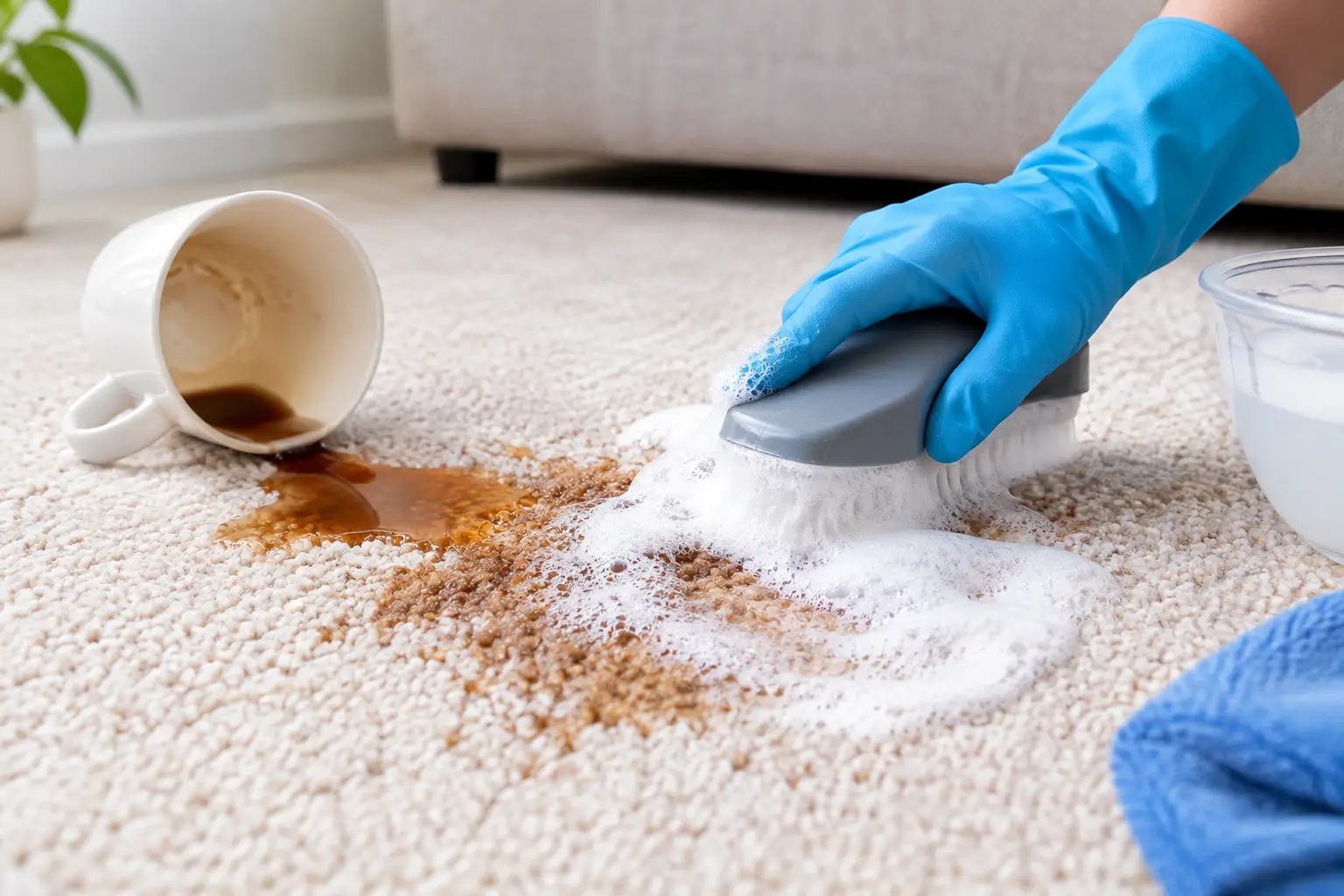
A spilled morning coffee can turn into a stubborn brown mark before the day has even started. Effective coffee stain removal depends less on a harsh cleaner and more on acting quickly, using the right amount of moisture, and avoiding the common mistake of rubbing the spill deeper into carpet or upholstery.
Coffee contains dark natural pigments, and additions such as cream, milk, sugar, or flavored syrups make the cleanup more complicated. Those ingredients can leave behind both discoloration and a sticky residue that attracts fresh soil. The good news is that many fresh coffee spills can be improved at home with a careful approach.
Coffee Stain Removal: What to Do Right Away
Start by blotting the spill immediately with a clean, white absorbent towel or paper towel. Press straight down to lift the liquid, then move to a dry section of the towel and repeat. Continue until the towel is no longer picking up coffee.
Do not scrub. Scrubbing spreads the spill outward, pushes it farther into the fibers, and can roughen the surface of carpet or upholstery. It may make the stain look larger even when some of the coffee has been removed.
Once you have blotted up the excess liquid, use a small amount of cool water on a clean white cloth. Dab the stained area lightly, working from the outer edge toward the center. Then blot again with a dry towel. The goal is to loosen remaining coffee without soaking the backing, cushion, or padding beneath the fabric.
For a fresh stain that still remains visible, mix a few drops of clear, mild dish soap into a cup of cool water. Dampen a cloth with the solution rather than pouring it directly on the stain. Gently dab, then blot with a separate cloth dampened with plain water to remove soap residue. Finish by blotting dry.
Use as little solution as possible. A carpet that feels wet well below the surface may take too long to dry, and excess moisture can contribute to odors, wicking, or mildew concerns.
Why Coffee Stains Sometimes Come Back
A coffee stain can look gone after the first cleanup, then reappear as the carpet dries. This is often called wicking. It happens when coffee residue below the surface moves upward with moisture during drying.
Milk-based coffee drinks are especially likely to cause a lingering issue. The visible color may fade, but proteins, sugars, and oils can remain in the fibers. Over time, that residue can make the area feel stiff, attract dirt, or create an unpleasant odor.
If the stain returns after drying, avoid repeatedly soaking the same spot. More water may temporarily dilute the discoloration but can also carry residue farther into the carpet. Instead, blot again with minimal moisture or arrange professional cleaning if the spot is large, old, or returning.
Different Surfaces Need Different Care
Carpet is forgiving compared with some household fabrics, but every material has limits. Synthetic carpet fibers often respond well to prompt blotting and a mild cleaning solution. Wool carpet, natural-fiber rugs, silk, velvet, and delicate upholstery need more caution because the wrong product can alter color, texture, or fiber strength.
Before using any cleaner, test it in a hidden area. Look for color transfer on the cloth, fading, or a change in texture after the test area dries. If you see any of these signs, stop rather than risking a larger visible problem.
Area rugs deserve special attention. A coffee spill on a handmade, oriental, wool, or antique rug may affect dyes differently from one section to another. Blot the spill right away, but leave deeper treatment to a rug cleaning professional. Aggressive spot products can set the color bleed or create pale patches that are harder to correct than the original stain.
For upholstered furniture, keep liquids especially limited. Sofa and chair cushions can hold moisture inside the filling long after the surface feels dry. Blot carefully, avoid saturating seams and buttons, and use air circulation to help the area dry. A fan is useful, but avoid high heat, which can set certain stains or damage sensitive materials.
Mattresses require the same low-moisture mindset. If coffee reaches a mattress, blot it immediately and use only a lightly damp cloth for follow-up cleaning. Saturating a mattress can trap moisture deep inside, where it is difficult to dry completely.
What Not to Use on a Coffee Spill
Strong bleach products, ammonia-based cleaners, and heavily fragranced spot treatments are rarely the right first choice for a coffee stain. They can damage fibers, leave a residue, or create a strong odor in your home. Bleach may also remove the carpet’s color along with the stain.
Avoid using colored towels, printed napkins, or dark cloths. Dye can transfer to damp carpet and add another stain to the problem. White towels make it easier to see whether coffee is still lifting from the fibers.
Hot water is another common mistake. Cool water is the safer choice for most fresh coffee spills, particularly when the drink included milk or cream. Heat can make some food-based residue more difficult to remove.
Finally, skip the temptation to use large amounts of powder, salt, or baking soda on a wet spill. These products may be difficult to remove completely from dense carpet and can leave behind a gritty residue. For odor control after the area is fully dry, a professional assessment is often more effective than adding more products at home.
When a Professional Cleaning Is the Better Choice
Home treatment is most successful when the spill is fresh, small, and limited to a durable fabric. It makes sense to call for help when coffee has dried, the stain has spread, the carpet has lightened around the spot, or an odor remains after cleaning.
Professional service is also a smart choice for light-colored carpet, heavily used furniture, wool rugs, and large spills that reached the padding. These situations need more than surface blotting. The cleaner must remove residue while controlling moisture so the material can dry properly.
DryMaster of Puget Sound uses a barely damp, dry-shampoo cleaning approach for carpets and upholstery. This type of low-moisture cleaning is particularly useful when homeowners want deep cleaning without leaving soft surfaces soaked for hours. It helps address residue and tracked-in soil while reducing the drying-time hassle associated with overly wet methods.
For homes in Gig Harbor, Tacoma, Port Orchard, Bremerton, and the Key Peninsula, prompt service can make a real difference after a major spill. The sooner the stain is addressed, the better the chance of preventing it from becoming a lasting mark.
Keep the Spot From Becoming a Bigger Problem
After cleaning, allow the area to dry completely before walking or sitting on it. Place a clean white towel over a damp carpet spot and weigh it down lightly for 30 to 60 minutes if it still feels moist. This can help draw remaining moisture and residue toward the towel instead of back to the surface.
Once dry, vacuum carpet gently to restore the fiber texture. On upholstery, brush the fabric lightly in its natural direction if the material allows it. Check the spot again the next day in natural light, since some faint discoloration is easier to see after full drying.
Coffee spills happen quickly, but they do not have to become permanent reminders of a busy morning. Blot early, keep moisture under control, and get professional help when the fabric, stain, or drying risk calls for more than a simple spot cleanup.
Leave a Reply