A carpet can look clean right after any professional service, but the hours that follow tell a more useful story. When comparing carpet shampoo vs hot water cleaning, homeowners usually want answers to practical questions: Will the stain come back? How long will the carpet stay wet? Is it safe for children and pets? And will a musty odor show up a day later?
The right method depends on the carpet’s condition, the type of soil involved, and how much moisture your home can comfortably handle. Hot water extraction can be effective in the right situation, but it is not the only way to get a deep clean. A low-moisture carpet shampoo method offers a different set of benefits, especially for busy households that need clean, fresh carpets without the inconvenience of soaking.
Carpet Shampoo vs Hot Water Extraction: The Core Difference
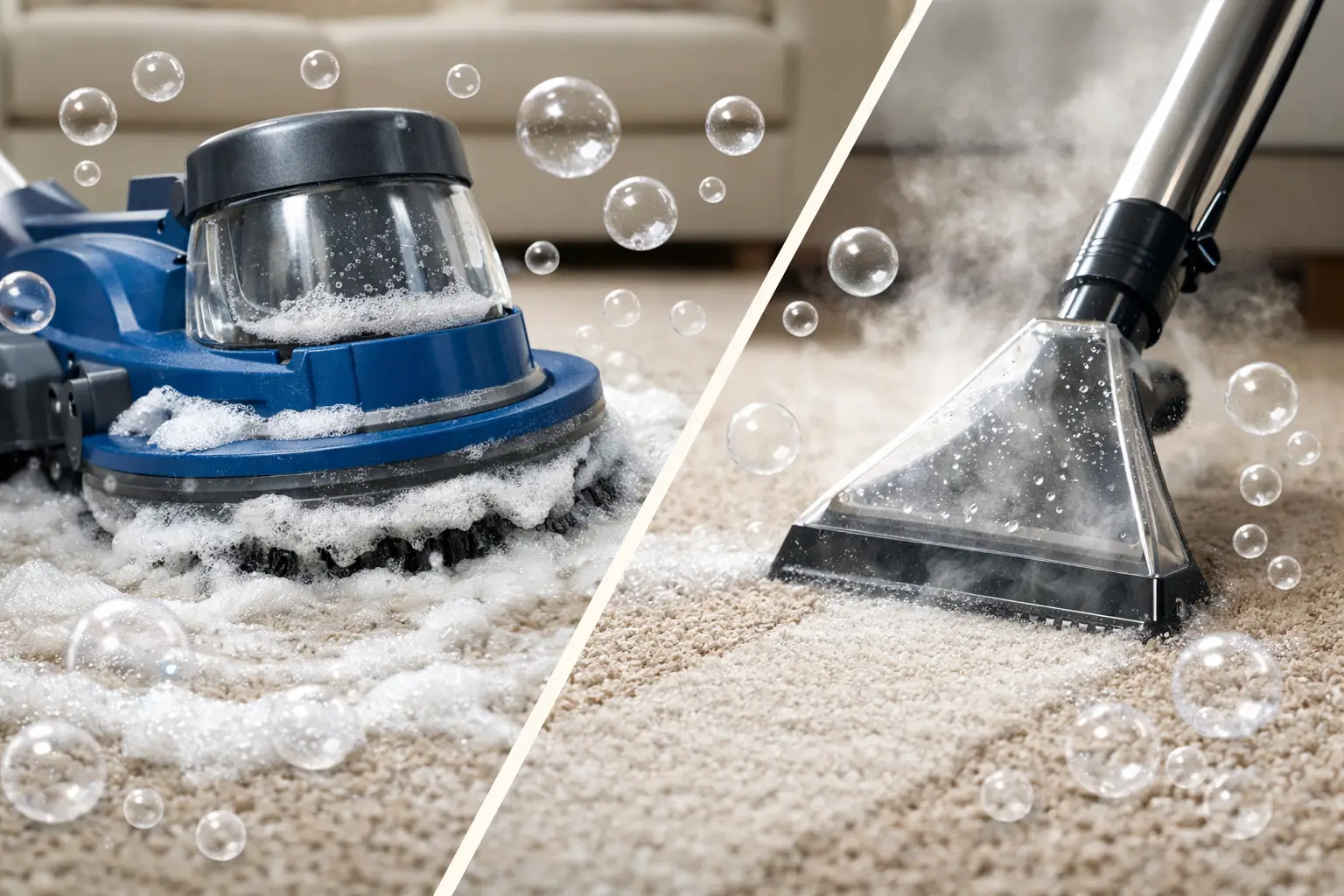
Hot water extraction is often called steam cleaning, although most professional systems use hot water and cleaning solution rather than true steam. The machine applies heated water into the carpet, then vacuums it back out along with loosened dirt. Because the process relies on moisture, drying can take several hours and sometimes longer, depending on the equipment, airflow, humidity, carpet thickness, and how heavily the carpet was soiled.
Dry-shampoo or low-moisture carpet cleaning works differently. A professional applies a small amount of cleaning solution designed to break down soil and lift it from carpet fibers. Specialized equipment agitates the fibers, captures dirt, and leaves the carpet barely damp rather than saturated. The goal is a thorough clean without introducing excess water into the backing and pad.
Neither approach is automatically right for every home. The better question is whether the cleaning method matches your carpet, your concerns, and your schedule.
Drying Time Is More Than a Convenience
For many Puget Sound homeowners, dry time is a major deciding factor. Our cooler, damp climate does not always provide ideal conditions for wet carpets to dry quickly. A carpet cleaned with hot water extraction may need six to 24 hours before it is fully dry. Fans, open windows, and good ventilation can help, but they do not eliminate the issue when the carpet has been heavily wetted.
Low-moisture shampoo cleaning is designed for a much faster return to normal use. Carpets are typically barely damp and can often be walked on much sooner. That matters when you have children, pets, guests, or simply do not want to rearrange your day around wet floors.
Quick drying also helps reduce the conditions that can lead to lingering damp odors. Carpet backing, padding, and subfloor materials do not respond well to unnecessary moisture. When water reaches beyond the carpet surface and does not dry promptly, mildew risk becomes a real concern, particularly in older homes or rooms with limited airflow.
Which Method Removes Dirt and Stains Better?
Hot water extraction has a place in carpet care. It can be useful for carpets with heavy, water-soluble soil or severe buildup that needs flushing. A qualified cleaner should use the appropriate amount of water, strong extraction equipment, and proper drying support. More water is not the same as a better cleaning, though. Over-wetting can leave behind problems that are more frustrating than the original stain.
Professional carpet shampoo cleaning can remove embedded dirt, traffic-lane grime, pet-related soils, and many common household spots without flooding the carpet. Proper agitation is key. Dirt sticks to fibers, and a quality low-moisture process uses cleaning agents and mechanical action to release that soil rather than depending solely on large volumes of water.
Stain results always depend on what caused the stain and how long it has been there. Coffee, wine, food, mud, pet accidents, ink, and oily products all behave differently. Some stains permanently alter carpet dye or fibers, which means even the best cleaning may improve the area without making it disappear completely. A dependable cleaning professional will set that expectation clearly instead of promising a miracle.
Watch for Wicking After Wet Cleaning
Have you ever seen a spot disappear during cleaning, only to return the next day? That is often wicking. Moisture travels upward through the carpet as it dries, carrying deep soil from the backing or pad back to the surface.
Wicking is more likely when a carpet is heavily saturated or when a spill reached the pad before treatment. Low-moisture methods can reduce the chance of wicking because they avoid pushing large amounts of water through the carpet. However, severe contamination may still require targeted treatment and, in some cases, pad-level attention.
Residue Matters for Long-Term Cleanliness
A clean carpet should feel soft and look fresh, not stiff, crunchy, or sticky. Residue is one reason some carpets seem to get dirty again quickly. If too much detergent is used, or if cleaning solution is not properly removed, the remaining film can attract new dust and soil.
This can happen with hot water extraction when the cleaning process is rushed or poorly rinsed. It can also happen with shampoo cleaning if the wrong products or techniques are used. The method alone does not guarantee a residue-free result. Product quality, dilution, equipment, and technician experience matter.
DryMaster of Puget Sound uses a barely damp dry-shampoo process built around residue-free cleaning and family-safe products. For homeowners, that means the focus stays on what you can see and feel: cleaner fibers, fresher rooms, and no need to live around wet carpet for the rest of the day.
Safety for Kids, Pets, and Everyday Living
Cleaning products belong in the comparison too. A method may clean effectively, but it should also fit the people and animals living in the home. Ask what products will be used, whether they are non-toxic, and whether any precautions are needed after service.
Hot water extraction often uses cleaning agents before the rinse step. Low-moisture shampoo cleaning also uses solutions, so the meaningful distinction is not simply “chemical” versus “chemical-free.” It is whether the products are selected and applied responsibly, whether they leave residue, and whether the cleaner explains what to expect.
For homes with crawling babies, pets that spend time on the floor, or family members sensitive to strong fragrances, a non-toxic, low-residue approach can offer welcome peace of mind. It also helps to choose a service that treats odors at their source rather than covering them with perfume.
When Hot Water Cleaning May Make Sense
Hot water extraction can be a reasonable option when a carpet has extreme soil buildup, significant water-soluble contamination, or a manufacturer warranty that specifically calls for that process. It can also be appropriate when the cleaner can extract thoroughly and the home has strong airflow for fast drying.
Before scheduling, ask how much moisture will be used, how long drying is expected to take, and what steps the company takes to prevent over-wetting. If the answer is vague, that is a concern. A professional should be able to explain the plan for your carpet rather than treating every room the same way.
When Low-Moisture Carpet Shampoo Is the Better Fit
Low-moisture cleaning is often the stronger choice for regularly maintained carpets, occupied homes, and anyone who wants a fast turnaround. It is particularly helpful for households managing pets, active children, allergy concerns, or back-to-back schedules. You get a deep, visible refresh without turning your living room into an off-limits drying zone.
It is also a practical choice for rooms where excess moisture is a bad trade-off, such as basements, rooms with limited ventilation, or spaces with carpet installed over older padding. The cleaner should still inspect the carpet first, because heavily damaged flooring, severe pet contamination, and old stains may need more specialized treatment.
Choose the Result, Not the Label
The best carpet cleaning method is not the one with the most impressive machine or the most water. It is the one that removes soil safely, respects the condition of your carpet, dries promptly, and leaves no sticky residue behind.
If your carpet needs attention, start by considering what happens after the cleaning crew leaves. A clean-looking carpet that stays wet, smells damp, or quickly attracts new dirt is not a convenient result. A properly cleaned carpet should let your household get back to normal quickly, with fresher rooms and confidence underfoot.
Leave a Reply